
Smaller than Banff, quieter than Jasper, but absolutely spectacular – Yoho National Park delivers turquoise lakes, jaw-dropping panoramas and stunning sunsets without the crowds. Here's your essential guide to Canada's underrated gem.
15th December 2025 | Words by Aila Taylor | Photos as credited
With turquoise lakes, thundering waterfalls and sweeping glaciers, Yoho National Park is an adventure playground that showcases some of the best sights in the Canadian Rockies. Although Yoho is smaller and less visited than the neighbouring Banff and Jasper national parks, it is vastly underestimated and packed full of natural wonders. To take advantage of all the national park has to offer takes several days, and it is well worth a trip in its own right, as well as being a worthwhile stop for those road-tripping from Vancouver to Calgary along the Trans-Canada highway.
The park is less developed than its neighbours, with only a few roads and one small town. As a result, it is best experienced by heading into the backcountry with overnight trips. You need a Parks Pass to enter all national parks in Canada, and the car parks in Yoho are frequently checked by rangers that will give fines visitors without a pass.
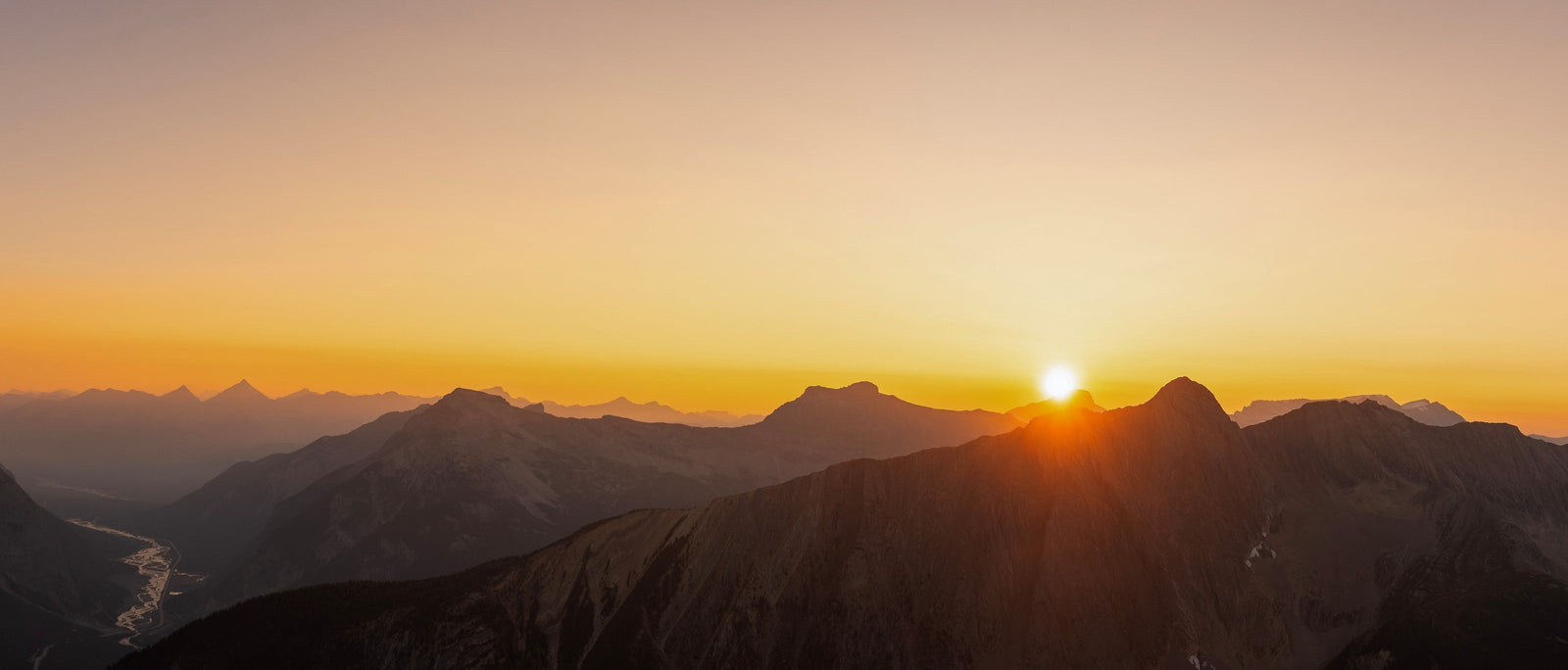
Sunset over silhouetted mountain peaks in Yoho National Park, with the sun dropping down below the ridgeline casting warm orange and golden light across a gradient sky fading from deep blue to amber. Photo by Aila Taylor.
Don’t miss
Essential stops on a tour of Yoho include the glistening alpine lakes of Emerald Lake and Lake O’Hara, and the glacier-fed waterfalls of Takkakkaw Falls and Laughing Falls. Don’t miss the opportunity to explore more of the national park on an overnight circuit hike, such as the Iceline Trail loop, or to see unique geological features such as the Burgess Shale fossil beds and the Natural Bridge.
Emerald Lake lives up to its name – that impossibly bright green glow comes from glacial rock flour catching the light. Paddle out from the crowds for the best views. Photo by Aila Taylor.
How to get there
Yoho National Park is in the heart of the Canadian Rockies, a sparsely populated area with no public transport. The multitude of visitors makes it fairly easy to travel by hitch-hiking, but most people drive. Travel is easy by car due to the Trans-Canada highway, a major road which cuts through Yoho National Park between the towns of Banff and Golden. Parking in extremely popular tourist spots, such as Emerald Lake and Takkakkaw Falls, can get very busy so it is a good idea to visit these locations in the morning or evening. The closest large airport is Calgary, about 2 hours’ drive away. Many visitors also drive from Vancouver to Calgary (or vice versa), a popular road trip route that spans several mountain ranges, mountain passes and national parks along the Trans-Canada highway, including travelling through Yoho.
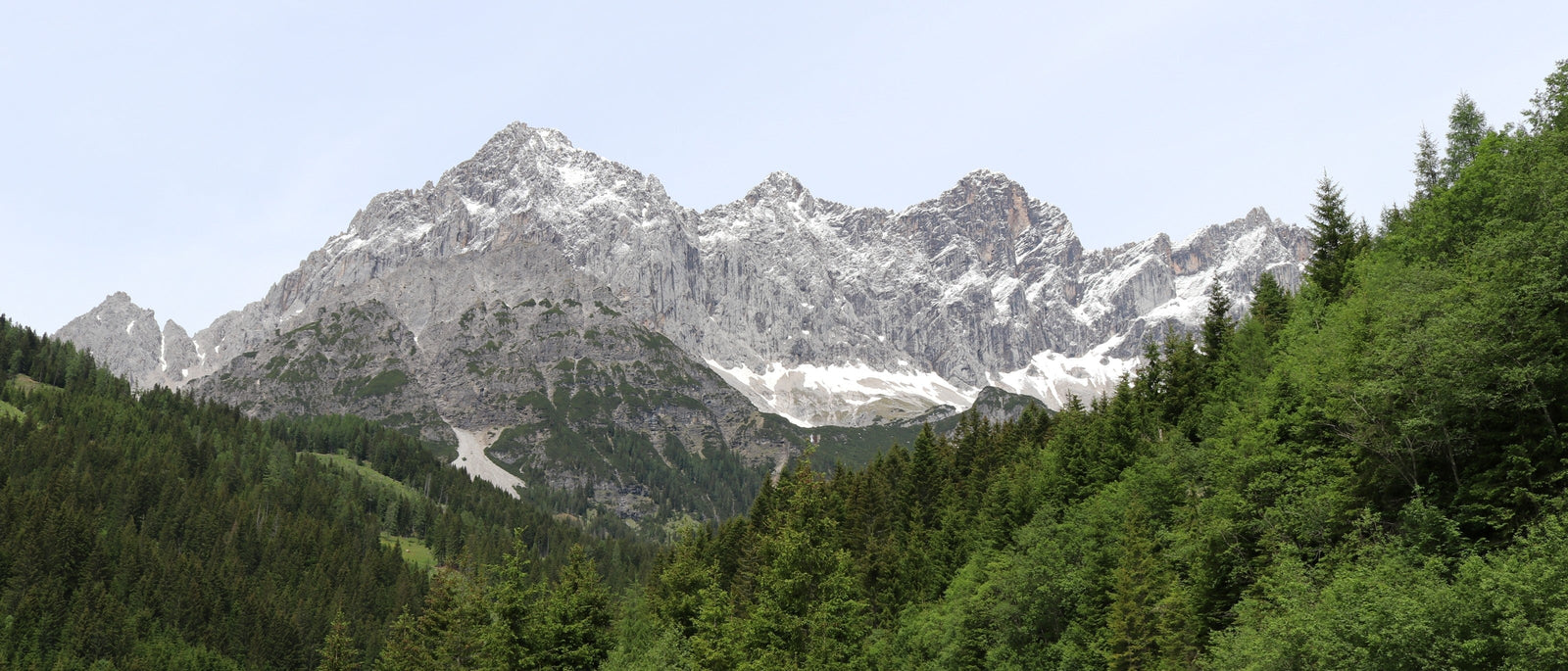
Wapta Lake sits right beside the Trans-Canada Highway, making it one of Yoho's most accessible turquoise rewards. Those layered peaks showcase the geological drama that earned Yoho its UNESCO World Heritage status as part of the Canadian Rocky Mountain Parks. Photo by Aila Taylor.
When to go
Most visitors visit Yoho in summer, when the longer days provide more time to explore the mountains and the alpine meadows are decked out in colourful wildflowers. Spring and autumn have fewer visitors and can be better times to experience solitude in the mountains, but generally bring more rain and overcast days. Winter in the Rockies is extremely magical, with cold temperatures and lots of snow. However, the steep peaks in Yoho mean that the sun rarely reaches the valley floor. There aren’t any ski resorts in the national park itself, but Lake Louise and Kicking Horse are both popular resorts close by.
The Wapta Icefield is an enormous mass of ice which feeds the rivers and waterfalls that define Yoho. The multi-day Wapta Traverse crosses this terrain, linking ACC huts via glacier travel that demands solid crampon skills and crevasse awareness. Popular with both summer alpinists and winter ski tourers, though the scenery's equally unforgiving regardless of season. Photo by Aila Taylor.
What to do
Beyond the headline attractions, Yoho rewards those willing to venture deeper. Tackle the Iceline Trail's high-altitude plateau for sweeping glacier views, or earn your sunrise from Paget Peak's 1944 fire lookout – Canada's oldest, still standing and still sheltering weather-beaten hikers. Serious mountaineers can test themselves on The President's crevassed glaciers, while multi-day adventurers might fancy the Wapta Traverse's icefields and hut-to-hut glacier crossings. The beauty of Yoho lies in its scale: compact enough to cover properly in a long weekend, yet packed with enough peaks, passes and plunging valleys to justify a fortnight's exploration. Just remember your Parks Pass, because the rangers are vigilant.
Waterfalls
Powerful waterfalls fuelled by melting glaciers are one of Yoho’s most defining features. At 260 metres tall, Takkakkaw Falls is the fourth-longest single-drop waterfall in Canada. Its spray is so strong that you need to wear full waterproofs to prevent a drenching when standing close to the waterfall, and on a sunny day the water droplets will produce a curtain of shimmering rainbows. Further up the valley, Laughing Falls and Twin Falls are equally impressive, despite being shorter in height. They can be visited on a day hike, but back-country campsites near both falls provide opportunities to appreciate the falls for longer. As the hike is very popular, camping overnight provides better opportunities for exploring the waterfalls with fewer people.
The Kicking Horse River's layered limestone shelves show millions of years of geological history, while the autumn larches add a brief splash of gold to the evergreen backdrop. Photo by Aila Taylor.
Other popular waterfalls include Wapta Falls, which is the largest waterfall on the Kicking Horse River and easily accessible beside the Trans-Canada Highway. Michael Falls provides a majestic waypoint along Yoho Pass, a trail that runs up and over a mountain col between Emerald Lake and Takkakkaw Falls. On the road to Emerald Lake, it is well-worth a stop by Natural Bridge, where a narrow and forceful waterfall cascades through a natural rock arch.
Natural Bridge proves nature's a better sculptor than any stonemason. Millennia of Kicking Horse River fury carved this rock arch into being. It's a quick roadside stop on the way to Emerald Lake, but worth lingering to watch that turquoise torrent squeeze through solid stone. Photo by Aila Taylor.
Lakes
One of Yoho’s most photographed features is Emerald Lake, named so because of its bright green hue produced from light reflecting off rock particles in the water. While the lakeside near the car park is often extremely busy, the full circuit walk around the lake will lead you away from the crowds and into Emerald Basin. It is also possible to rent a canoe and paddle across the lake, providing close proximity to the water and a different perspective of the surrounding peaks.
Emerald Lake's famous green glow softens to moody turquoise under cloud cover—proof that this glacial beauty doesn't need blue skies to impress. The full lake circuit offers far better solitude than the busy car park. Photo by Aila Taylor.
Lake O’Hara is equally famous, known for its vivid turquoise colour contrasting with deep green forested banks. Although smaller than many of the other popular lakes in the Rockies, Lake O’Hara is nestled underneath the Opabin Plateau, and a popular bird’s eye view of the lakes can be seen from a point known as the Opabin Prospect and the Odara Grandview Prospect.
The Alpine Circuit is another popular walk from Lake O’Hara, which covers 11km and just over 1000m of elevation gain. It passes a multitude of lakes including Schaffer Lake, Cascade Lakes and Lake Oesa, in addition to traversing the sides of Mount Schaffer and Mount Huber, providing jaw-dropping views back across the valley. Those that just can’t get enough of alpine lakes may also wish to extend the day to visit Lake McArthur, which is directly fed from a glacier on the side of Mount Biddle at the end of the lake.
Unfortunately, Lake O’Hara’s popularity makes it increasingly difficult to visit. To mitigate visitor impact, Parks Canada have closed the road leading to it to general users. To book a place on the shuttle bus you need to enter the lottery system, which opens in March each year, or book accommodation in the (also very sought after) campground or lodge. Although users cannot drive personal vehicles up the 11km Lake O’Hara road, the public are allowed to cycle or walk along it, so these are often used as alternatives to the shuttle bus.
Lastly, Sherbrooke Lake is another vibrant blue lake sheltered by rugged peaks, which is equally mesmerising but significantly less busy than Emerald Lake and Lake O’Hara. As well as being a valuable destination in its own right, it is also a worthwhile stop on hikes to Paget Peak, Mount Ogden and the Waputik Icefield.
Sherbrooke Lake delivers that signature Rockies turquoise without the Emerald Lake or Lake O'Hara crowds. Sheltered by rugged peaks and accessible via a manageable day hike, it's also a solid basecamp for pushing on to Paget Peak, Mount Ogden, or the Waputik Icefield. Photo by Aila Taylor.
Hikes
There are numerous hikes in Yoho National Park with unique qualities that make them stand out from the crowd of high-quality hikes in the Canadian Rockies. One of the most popular circuits is the Iceline Trail, which traverses a high plateau on the edge of the Emerald Glacier. The trail is part of several loop variations. The most popular ones are the Lake Celeste variation, at 17.1km, and the Little Yoho Valley option, at 21.1km. The first option cuts down halfway along the Iceline Trail, heading through alpine meadows and lush forest to meet the Yoho Valley Trail at Laughing Falls.
Trail choices at Emerald Lake. Photo by Aila Taylor.
The second option heads to the end of a steep-sided valley known as ‘Little Yoho’ where there is a campground and a mountain cabin. The route then follows the Little Yoho Valley Trail back to Laughing Falls. From here, Whaleback Mountain and Twin Falls make worthy additions to the route. All variations of this circuit include an excess of outstanding views with all of the key features that make Yoho National Park so special: sharp peaks, alpine lakes, thundering waterfalls, glaciers, and alpine meadows peppered with wildflowers. To really make the most of it, it is a good idea to complete the circuit over two or even three days, stopping at the campgrounds or huts along the way.
Golden hour scrambling in Yoho – those layered sedimentary peaks in the distance tell 508 million years of geological history, visible in the Burgess Shale fossil beds. This is the kind of terrain where proper footwear matters: loose rock, steep angles, and spectacular drop-offs require focused attention, even when the evening light's doing its best to distract you. Photo by Noah Korver.
Smaller day hikes in the national park include Paget Peak, the route to which passes an old fire lookout that you can still go into. The Paget lookout, built in 1944, is the oldest fire lookout in Canada’s national parks, and now serves as a handy shelter. Paget Peak provides clear views down to Sherbrooke Lake and a sweeping vista for sunrise and/or sunset. From the summit, a ridgeline can be followed to Paget Peak North, which is actually 170m higher.
Built in 1944, Paget Peak's fire lookout is the oldest still standing in Canada's national parks – and it still shelters knackered hikers. Time your arrival for sunset and you'll understand why fire watchers chose this spot: sweeping views down to Sherbrooke Lake and a front-row seat to the Rockies' evening light show. Photo by Noah Korver.
At the heart of the national park sits an enormous mass of ice known as ‘The President’. With an altitude of 3138m, The President is a worthy mountaineering objective alongside the neighbouring Vice President (at 3066m). Both are serious alpine summits that can be climbed in one day, and require crossing a long, steep glacier that is heavily crevassed.
Yoho Valley also marks the start/end point (depending on which way you’re going) of the Wapta Traverse, a popular multi-day hike dominated by extensive glacier travel across the Waputik and Wapta Icefields, staying at ACC (Alpine Club of Canada) huts along the way. The route can be done as an alpine route in summer, and is also popular for ski touring in winter.
Heading towards St Nicholas Peak on the Wapta Icefield – the kind of terrain that makes the Wapta Traverse a bucket-list alpine adventure. Photo by Aila Taylor.
Flora and Fauna
Yoho is home to many mammals that are staple inhabitants of the Canadian Rockies, such as bears, moose and elk. It is important to carry bear spray, especially from spring through to autumn, and to behave responsibly around wild animals (keep your distance and act in a non-threatening manner). This also means using the bear hangs or bear lockers available to store food at campgrounds when camping below the treeline, and using bear containers if wild camping above the treeline. Both bear spray and bear containers can be hired from local companies in Lake Louise, Banff and Canmore.
More elusive creatures include wolves, lynx and wolverines, which are generally only seen by visitors exploring the area at quiet times of day such as dawn and dusk. Higher up in the mountains, marmots and pika can often be seen. Both blend into the alpine environment that they have adapted to, but will screech to warn others of potential threats, so they are often heard before they are seen.
Yoho National Park includes some of the best-preserved examples of historic fauna in the Burgess Shale fossil beds. These sedimentary rocks are a remainder of a shallow sea that covered the area around 508 million years ago. The fossils are internationally renowned for their outstanding soft-tissue detail, which is unusual for fossils of this age, providing a well-preserved record of early animal life. The fossils provide insight into the period known as the ‘Cambrian explosion’, when many major animal groups first appeared on the fossil record. Parks Canada provide a variety of informative tours of the fossil beds, including access to restricted UNESCO sites.
Yoho also contains a rich diversity of flora, which is especially evident in the main wildflower season from mid-July to mid-August. Shrubs in the forest are decorated blood-red with buffalo berries, which are edible but very bitter. However, they are packed full of vitamin C and antioxidants, and serve as a readily available hiking snack for those with the palate for them. Other berries, such as raspberries, strawberries and huckleberries also populate the forests and lower mountain slopes in summer. The alpine meadows glow white and gold with western anemones, white mountain avens and glacier lilies.
Blood-red buffalo berries grow widely throughout Yoho. They are edible but very bitter, though packed full of vitamin C and antioxidants. Photo by Aila Taylor.
At higher elevations, clusters of whitebark pines grow on rocky slopes such as those on Paget Peak. The whitebark pine is an endangered species, and numbers have declined in recent decades due to white pine blister rust (a fungal disease), the mountain pine beetle, and impacts of climate change. It is a keystone species in sub-alpine ecosystems, creating a habitat for other species, retaining snow, and stabilising mountain slopes. The tree is even protected by law, and in 2018 Lake Louise Ski Area was fined $2.1 million for cutting down 39 whitebark pines without permission.
Where to stay
Field deserves more than a fuel stop. This tiny mountain town – Yoho's only settlement –punches well above its weight with characterful lodges like Truffle Pigs and the Canadian Rockies Inn, all timber beams and mountain views. But the real magic happens in the backcountry. The Alpine Club of Canada runs three huts here: Lake O'Hara's Elizabeth Parker Hut is notoriously competitive (lottery system essential), while the Little Yoho Valley's Stanley Mitchell Hut offers similar alpine immersion with marginally better booking odds. For proper solitude, the remote Scott Duncan Hut rarely fills. Alternatively, Yoho's five backcountry campgrounds deliver wilderness access without the accommodation lottery stress – though you'll still need to book ahead in summer.
Buildings in Field, Yoho's main settlement. Photo by Aila Taylor.
Hotels and Hostels
In the front country, larger towns such as Golden, Banff and Canmore have plenty of accommodation including hotels, hostels and self-catering options. The only town in Yoho National Park itself is Field, a quaint mountain town with picturesque buildings and lush gardens. There is a limited amount of visitor accommodation here, such as Truffle Pigs Lodge and the Canadian Rockies Inn.
There are a few ACC huts in the national park, including the Lake O’Hara (Elizabeth Parker) Hut which is managed through a lottery system in the summer due to high demand. The Little Yoho Valley (Stanley Mitchell) Hut is still popular but less competitive, and the Scott Duncan Hut is less competitive still, due to its remote alpine location.
Campgrounds
Campgrounds make up the majority of visitor accommodation in the national park. There are four frontcountry campgrounds and five backcountry campgrounds. While the frontcountry backgrounds are more accessible, the backcountry backgrounds provide an immersive experience that allows visitors to truly appreciate the wilderness of the national park.
Pitched up in one of the campgrounds on the bank of the Yoho River. Photo by J K Gabbert.
Where to eat and drink
Yoho National Park is less populated than the neighbouring parks of Banff and Jasper, and as a result options to eat and drink are more limited. For those camping in the national park or staying for multiple days it is advisable to bring food with you – there are a couple of small grocery stores at Lake Louise and larger stores in Golden. However, in Field, the Truffle Pig Bistro provides exceptional food and drink with a hearty yet eclectic menu. In Golden, Ethos Cafe is especially popular for its coffee and home-baked goods. There are a multitude of restaurants and bars in the evening, including the Wolf’s Den, which has a cosy and rustic feel.
Aila (formerly Anna) Taylor is an outdoor writer and mountain activist. She has previously published in the Guardian, The Independent, Vice and i-D magazines, amongst others. As an avid caver, hiker and cold-water swimmer, Aila is passionate about improving accessibility to the outdoors in addition to spreading awareness about the threats currently facing mountain regions.