Camp
  • Hiking in the Troodos Mountains

    Waterfall walks, rocky trails, frescoed Byzantine churches and wild mouflon high in the hills – a guidebook writer’s pick of the best hikes in Cyprus.

    Hiker in a white cap and purple backpack looks out over forested ridges and a winding valley road from the Mnimata Piskopon Trail in the Troodos Mountains, Cyprus

    30th October 2026 | Words by Nike Werstroh | Photos by Jacint Mig


    “We should run the last bit,” suggested Jacint, as we shared a koulouri, the delicious sesame-encrusted bread rings that are a popular snack throughout Cyprus – a legacy of the Mediterranean island’s unique melting pot of cultural and gastronomic heritage, which combines Greek, Levantine and Ottoman influences. As we munched, we scanned the path ahead. Trodden smooth by hundreds of feet, it snaked into the distance across the mountainside. It was late April and we still had a few hours’ daylight left, although most sensible hikers generally finished the route by mid-afternoon and were no doubt enjoying well-earned drinks and dinner in a taverna by now.

    At least this meant that we had the views of the pine-covered slopes to ourselves. Still, it was time to get a move on. I cinched the straps on my backpack a little tighter and broke into a slow run along the narrow path as it traversed the slopes of Mount Olympus. We were on the Atalanta Trail, a 14km loop that runs around the highest peak of the Troodos mountains. It’s actually the perfect setting for a late afternoon run. At least, it would have been if I’d had running shoes on. Instead, I ran slowly and awkwardly in my hiking boots, as my daypack rubbed my sweaty back. Every ten minutes or so we slowed to a brisk trot or stopped to take some photos.

    The Caledonia Waterfall Trail from Platres

    We were back in Cyprus on assignment, re-walking various hiking routes and shooting new photography in order to update our Cicerone guidebook. On reflection, our plan for the first day in the Troodos mountains might have been a bit ambitious, though not impossible. That morning we’d walked the 9km Caledonia waterfall circular route from Platres. This is a popular trail over easy terrain. However, we’d often paused for several minutes at a time to get long-exposure photos of the silky water rushing over rocks.

    Long-exposure shot of the Caledonia Waterfall cascading down a rocky cliff into a pool, with pines and spring greenery above

    Caledonia Waterfall, the highlight of the circular trail from Platres.


    While many hikers walk to the waterfall, few continue to complete the full circuit beyond, which climbs alongside a stream and then traverses the mountainside, with views all the way to the coast. It’s a superb walk. However, with lots of other routes to check, when we got back to Platres around 2pm we quickly decided that we should make the most of the afternoon by attempting to walk not one but two more trails nearby.

    Hiker in a cap and red top walks a rocky mountain path with hazy green hills stretching away towards the coast

    Great views on the return leg of the Caledonia trail.


    Linking the Artemis and Atalanta trails around Mount Olympus

    Both the Atalanta and the Artemis Trails run around Mount Olympus, which stands at an impressive 1,952 metres (6,404 feet). The absolute summit is restricted because a British long-range military radar station operates at the top, but the trails that traverse the mountainside still offer spectacular panoramic views. From Troodos Square we joined the shorter Artemis Trail, which contours around the mountain at a higher level. We followed it clockwise as far as the ski slopes. There, we joined the Atalanta Trail and followed it anticlockwise to return to Troodos Square. This plan allowed us to photograph the most scenic sections of both trails.

    However, it also meant that by the time we started running the remaining 9km in the late afternoon, we’d already walked 20km. Now, hiking 30km on easy terrain is not extraordinary, but in hindsight we should have started our day a bit earlier so that we could have covered the distance more comfortably. We are no strangers to running – we both run several times a week – but rarely in heavy hiking boots. Jacint was also concerned about the fact that we’d run out of food, so he was eager to get to a tavern or restaurant by dinnertime. The tantalising thought of souvlaki, Greek salad and grilled fish encouraged our legs to move dutifully, and without admitting it I started to enjoy the run.

    Hiker follows a narrow, rocky path beneath windswept pines, with cloud and hazy hills beyond, on the Artemis Trail in the Troodos

    Walking the Artemis Trail around Mount Olympus.


    By the time we got back to our hire car in the now-deserted car park in Troodos Square, it was well past 6pm. We checked into a hotel in Platres and showered quickly, before ordering grilled fish in a restaurant handily located just opposite the hotel.

    Mnimata Piskopon Trail to a UNESCO-listed painted church

    The next morning, we woke to the happy chatter of swallows, which were nesting beneath the half-roof of the small balcony outside our room. The birds had been hunting for their breakfast for several hours by the time we left Troodos Square at 9am, this time with a less ambitious plan than the previous day.

    The Mnimata Piskopon Trail eases you in gently. During the first few kilometres, we crunched over a carpet of dry pine needles beneath mighty black pines. An occasional opening in the trees gave us a peek towards the north, before the route suddenly dropped steeply towards the town of Kakopetria, nestled in the Solea valley. Surprisingly, this part of the route didn’t seem particularly popular. We descended derelict wooden steps half-buried under loose soil, stopping frequently to capture the extensive views towards the Kyrenia mountains. The last few kilometres followed a wide track, allowing for easy walking at a comfortable pace. It led to the Byzantine Agios Nikolaos tis Stegis church, where we arrived around lunchtime. After a well-deserved halloumi sandwich, we explored the small stone building. With no bell tower and a steep pitched timber roof, it looks distinctive, unusual and quite unlike any other church I’ve visited.

    Steep-pitched timber roof and rough stone-and-plaster walls of the Byzantine church of Agios Nikolaos tis Stegis, surrounded by pines

    Agios Nikolaos tis Stegis church.


    In fact, it is the only surviving building of a monastery complex that dates from the 11th century, with the second roof, constructed to protect the building from snow, only added a few hundred years later. The door was open, so we were free to look inside. Almost the entire interior is richly decorated with frescos from at least five different centuries. Agios Nikolaos tis Stegis is one of a number of Byzantine churches in the Troodos that are on the UNESCO World Heritage List for their colourful frescos and unique architecture.

    Byzantine fresco inside Agios Nikolaos tis Stegis showing a haloed Christ in an orange robe, holding a cross and pulling a kneeling figure from a tomb, against a deep blue background with Greek inscriptions

    Vault frescos inside Agios Nikolaos tis Stegis. Credit: Zairon via Wikimedia Commons.


    Just as we were leaving, two cars pulled up in the church’s dusty car park. The passengers emerged from their air-conditioned vehicles and hurried into the cool interio of the church. While the Agios Nikolaos tis Stegis – just like many of the other painted churches – is accessible by car, I wasn’t envious. I wouldn’t have wanted to miss the scenic trails that lead to these churches. We rejoined our route, which I was really looking forward to walking again.

    Hiker with a purple backpack approaches the entrance of Agios Nikolaos tis Stegis church, with wooded hills behind

    Exploring the UNESCO-listed church of Agios Nikolaos tis Stegis.


    Kannoures Trail: the wilder side of the Troodos

    We first stumbled upon the Kannoures Trail about a decade ago and it remains one of our favourite routes in the Troodos. For the first half an hour or so we trod the wide forest track and then, joining a narrow path, we navigated between boulders, rock-hopping across the Karkotis River multiple times. This is the wilder side of the Troodos, where the tourists in white trainers do not venture. We climbed steadily up a hillside scattered with rocks and tall pines clinging desperately to the steep slope.

    Hiker with a purple backpack steps across a plank laid over a rocky stream beside a trail signpost on the Kannoures Trail

    Crossing the stream on the Kannoures Trail.


    After crossing the river once again, I looked up and saw three animals higher up on the rocky mountainside, almost completely camouflaged by their brown coats. All three stopped munching and stood stock still, frozen to the spot, observing us carefully. They were mouflon, the wild sheep endemic to Cyprus that is the island’s largest mammal. They have lived here for thousands of years and have become a national symbol. Nothing proves that better than the depictions of mouflons found on Roman mosaics in Paphos. Today, they even appear on the one-, two- and five-euro cent coins.

    Weathered fallen tree trunk in a boulder-strewn stream bed, with a hiker climbing among rocks and pines in the distance / Smiling hiker in a white cap and turquoise top hops between stones across a shallow stream beneath pines in the Troodos

    The wilder side of the Troodos. / Hopping from rock to rock across the stream, albeit with less skill than the mouflon.


    At one point however, the mouflon was nearly hunted to extinction. A favoured quarry for game hunters from the Middle Ages onwards, by 1935 there was only a handful of these beautiful animals left. Fortunately, strict ‘no hunting’ rules were introduced to safeguard the remaining population, along with other protections for the Cypriot mouflon and their habitat. Today, a healthy number of mouflon live in the Paphos Forest and in the northern slopes of the Troodos, but they are not often seen, as they remain wary of humans. We were extremely lucky to spot them a few times during our walks, but the Kannoures Trail was the only trail where we always encountered them. We didn’t dare to move until they got bored of looking at humans and with a series of skilful skips, climbed the rocky mountainside, disappearing out of sight. We continued on the rough path and crossed the stream a few more times, hopping from rock to rock, just like the mouflon – though with considerably less skill.

    For the next hour or so we pressed on, ascending the rocky mountainside and navigating around some fallen trees. The stream, sometimes rushing swiftly and other times meandering slowly around rocks, made its way downhill. We did the same, returning to Troodos Square with plenty of time to spare. We made the most of it, heading to another excellent local restaurant for a leisurely dinner.

    The following few days brought more of the same, as we explored new routes and revisited old favourites, and I never tired of views that so often stretched all the way to the coast. That is the Troodos at its best. Cyprus is rightly famous for its beaches, but its mountains offer something rarer: tumbling waterfalls, frescoed Byzantine churches and wild mouflon, all within a day’s walk of Platres or Troodos Square. Drive to the churches if you must – but you’ll miss everything that makes getting there worthwhile. A piece of advice though: start earlier than we did, and pack more food.

    As our plane lifted off a week later, I pressed my forehead to the window. The rugged Troodos mountains were laid below us, and though the trails were invisible from above, I knew exactly where they lay beneath the pines – and that we would be back to walk them again.


    Nike Werstroh is an outdoor writer and the co-author of several walking guidebooks, published by Cicerone Press. Nike and her partner, Jacint, are passionate about hiking the world’s best trails and sharing their love of walking with others through their guidebooks and photos.

    Website Instagram

    Also in Adventure

    Unmissable: Scotland in Autumn | WildBounds
    Scotland in Autumn: 5 Unmissable Outdoor Adventures

    Paddle Loch Faskally, walk the Quiraing on Skye and cycle Loch Katrine. Some of the best outdoor adventures in Scotland in autumn, hand-picked by Fiona Outdoors.

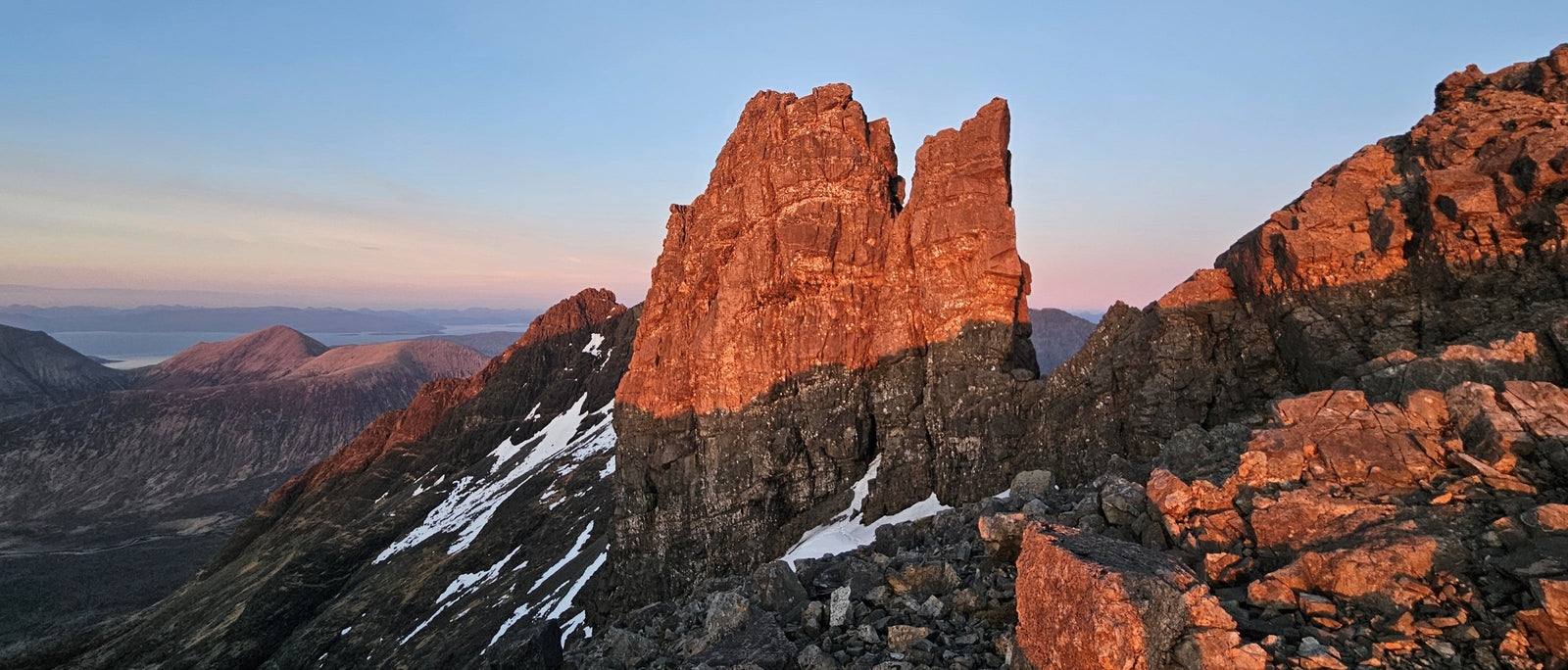
    The twin-topped rock tower of the Bhasteir Tooth glows orange-red in low light, its lower half in cool shadow, with patches of snow on the slopes below and a calm sea and distant hills fading to pink on the horizon.
    What I Wish I’d Known Before Tackling Skye’s Cuillin Ridge

    From route-finding and ropework to shiver bivvies and the elusive search for water, here’s what I learnt from three days on one of Britain’s most celebrated mountaineering routes.

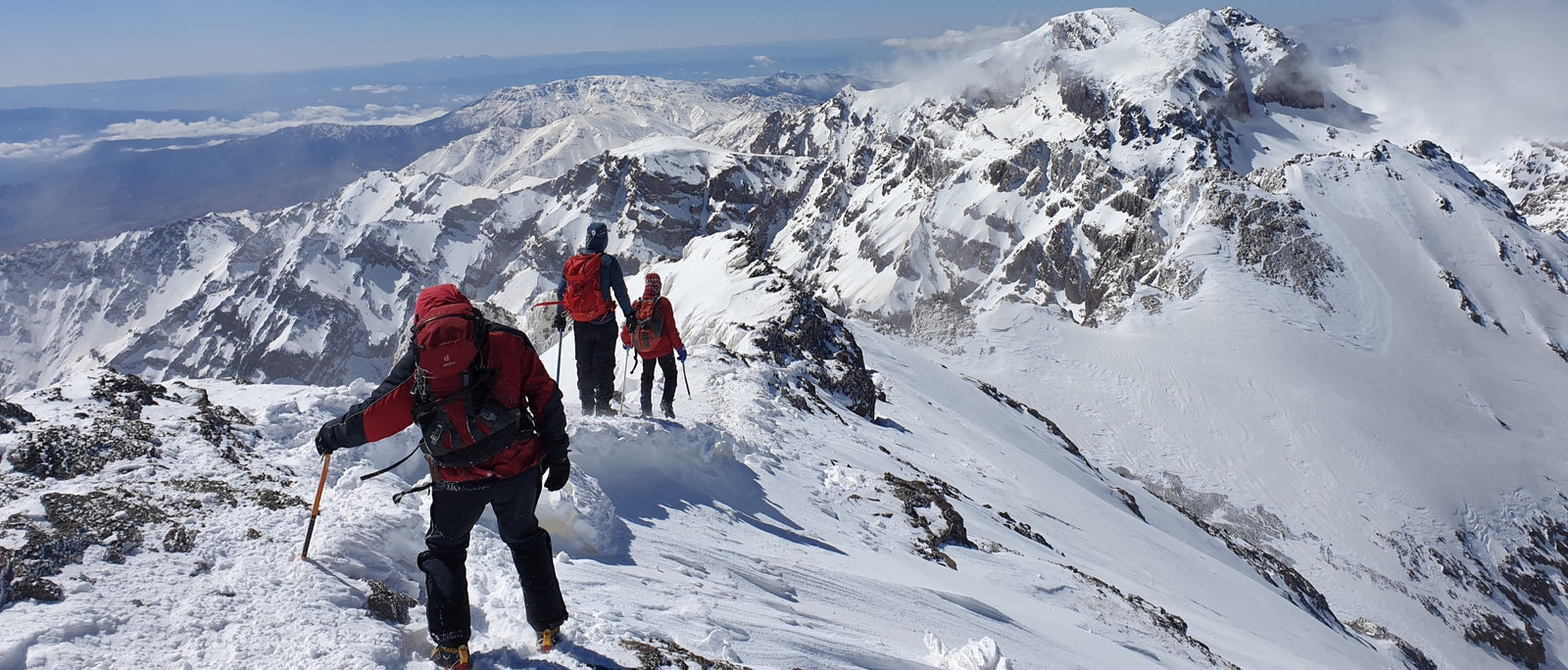
    Mount Toubkal, the highest peak in North Africa, is booming as an adventure destination. Here’s what a winter ascent via Ikhibi Sud is really like – and what the boom means for the High Atlas.
    Climbing Toubkal in Winter: North Africa’s Highest Peak

    Mount Toubkal, the highest peak in North Africa, is booming as an adventure destination. Here’s what a winter ascent via Ikhibi Sud is really like – and what the boom means for the High Atlas.