
Great music is great music, wherever you play it. However, there’s a certain kind of album that achieves true transcendence in the right setting. Not headphones-on-the-commute noise cancelling, or back-to-mine background murmur – but something that asks for a blazing fire, a lakeside view framed by tall, ruler-straight pines, and nowhere else to be. Albums that often feel like they were recorded somewhere quiet and still and remote, by people who had stripped things back until only the essence remained.

The cabin playlist is its own genre, really. It crosses folk and country, blues and alt-rock, classic and modern – but it holds together because all these records share a quality of distance. They sound utterly removed from ordinary life. They sound elemental, like woods and weather. It’s the kind of music that rewards being listened to properly from beginning to end, without interruption – other than maybe to flip the record over.

We’ve put together ten of the finest examples, ranging from early 1970s British folk to 21st-century American indie – a mix of the canonical and the less expected, with a few entries that might surprise you.
Cue them up in order, stack some logs on the fire, and turn off your phone.

The yardstick against which all pastoral British folk gets measured. Nick Drake’s debut is a record of almost unbearable delicacy – fingerpicked acoustic guitar, Robert Kirby’s string arrangements, and Drake’s barely-there voice. It was recorded in fits and starts in 1968 and ‘69, largely in London, but sounds like it came from somewhere much further from civilisation. ‘Cello Song, Time Has Told Me, The Thoughts of Mary Jane – each one lands a little heavier than it should. Ideal for late evenings when the sun has set, the lantern light flickers and you’re not quite ready to turn in for the night.

The mythology almost overwhelms the music now, but strip it back to the basics: Justin Vernon, a cabin in Wisconsin, and three months alone, writing and recording in the dark after a relationship ended and his band split up. The record that came out of it – raw-voiced, layered, frozen – changed a generation’s idea of what heartbreak could sound like. Skinny Love is the one everyone knows, but re: Stacks is the one to listen to in a cabin, gazing up at the stars from the front porch, as you contemplate what you’re doing with your life.

Springsteen’s strangest and most quietly devastating album, recorded alone in a dusty old house on a four-track cassette machine, originally as demos that turned out to be the actual record. Eleven songs about people at the end of their tethers – killers, drifters, workers, dreamers – delivered in a voice that sounds like dust and distance. This used to be something of an ‘if you know, you know’ album, at least until Deliver Me From Nowhere came out last year with Jeremy Allen White in the title role, but it still belongs in a different category to everything else Springsteen ever made – and it deserves a spot on this list.

Controversial, yes – critics were baffled when it came out, and the famous Rolling Stone review’s opening line ("What is this shit?") has followed it ever since. But revisionist history has been kind to Self Portrait, and rightly so. It’s Dylan in retreat, covering trad standards and country songs and old folk tunes, sounding like a man who’s stopped trying to be anything in particular. Playful, warm, rambling and strange – it’s the most cabin-friendly Dylan record (though John Wesley Harding and Nashville Skyline both make a good case too). Copper Kettle, from side three of the original double-album, is a simple song in praise of making moonshine; the perfect tune to spin as you uncork a bottle of last autumn’s sloe gin.

The ultimate retreat record, and one of the most quietly radical things any Beatle ever did (sorry, John). Recorded alone at his Scottish farm while the world was waiting for him to do something momentous, McCartney played every instrument himself, kept the accidental imperfections in, and made something that sounded almost defiantly lo-fi. The industry hated it at the time – critics wanted a statement, got a man pottering around in his shed. But that's exactly what makes it belong here. Junk, Every Night, That Would Be Something – songs that feel like they were written for no one in particular, yet land so personally. Put it on mid-morning when the mist is still hanging in the treetops and you've got the whole day ahead of you.

Martyn is one of British folk’s great overlooked figures – an Anglo-Scottish guitarist who spent the late sixties and early seventies fusing folk, jazz and blues into something entirely his own. Bless the Weather is the most approachable entry point: warm, intimate, occasionally playful, with an acoustic sound that feels like sitting in a farmhouse kitchen with a very gifted musician, sipping a steaming cuppa in a dented enamel mug. Head and Heart and the title track are as perfect as British folk gets.

Released the same year as Five Leaves Left and in many ways its counterpart – although where Drake was solitary and melancholy, Fairport Convention were expansive and electric, bringing American folk-rock sensibilities to traditional English material. Unhalfbricking sits at their peak, featuring Sandy Denny in imperious form, a stunning electric reworking of Dylan’s Percy’s Song, and the extraordinary A Sailor’s Life – eleven minutes and sixteen seconds that launched British folk-rock as a serious art form. Essential.

The most recent record on the list, but arguably one of the most quietly radical. Where Big Thief’s ambitious double album got the attention, Double Infinity – a stripped-back, home-recorded companion piece from Adrianne Lenker and Buck Meek – is the one that actually sounds like it belongs in a cabin. Lo-fi in the best sense: you can hear the room, the imperfections, the breath between notes. Lenker writes the kind of songs that feel old even when they’re new, rooted in landscape and the body, and here the production gets out of the way entirely and lets them breathe.

Nelson’s masterpiece, and one of the most defiantly sparse records in country music history. A loose concept album about a drifter and a preacher, recorded almost without production, stripped to voice, guitar and a few instruments – exactly as Nelson wanted it and contrary to what his label expected. The silence between notes matters here as much as the notes themselves. Blue Eyes Crying in the Rain, Time of the Preacher, Hands on the Wheel – the perfect cabin record for an overcast afternoon when you’re honing a trusty splitting axe before heading out to the woodshed.

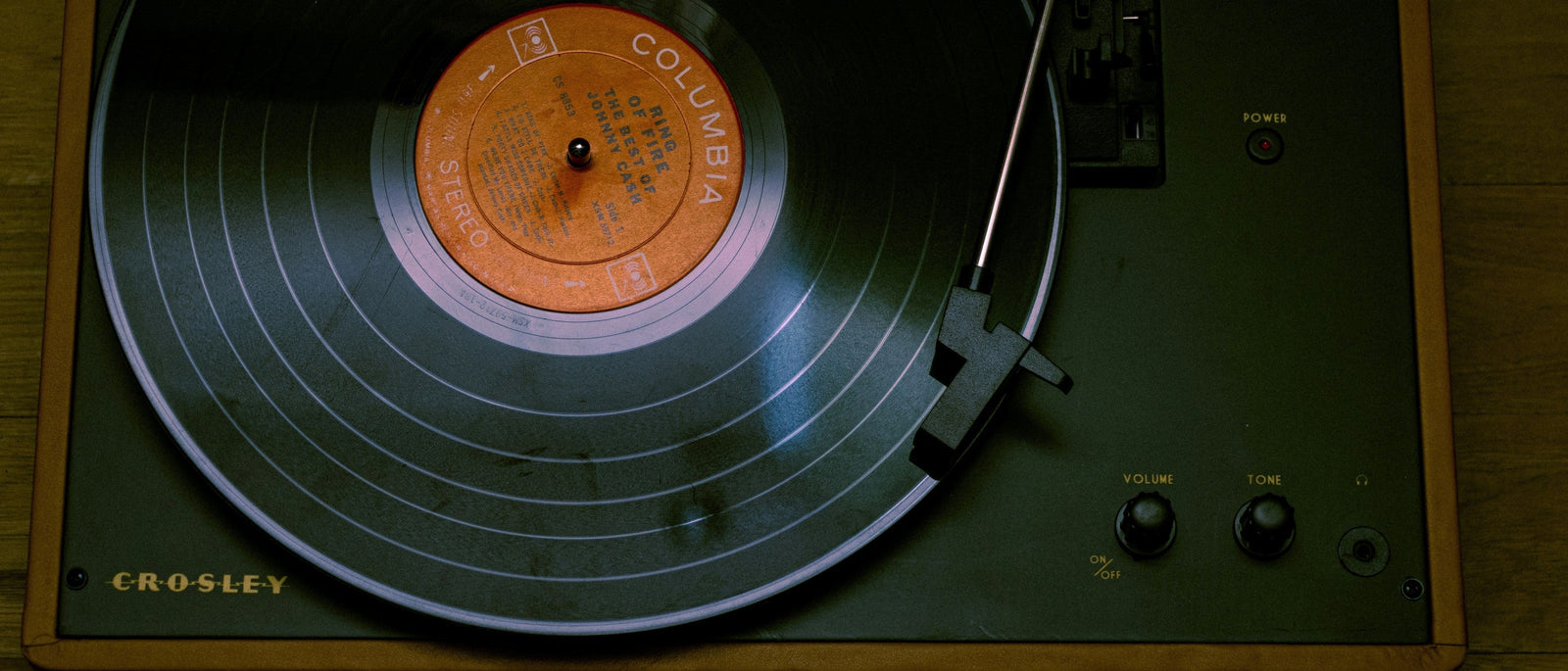
The story is almost too good to be true: production impresario Rick Rubin, fresh from making multi-platinum rap and metal records, strips everything back to a legend and an acoustic guitar, mostly recorded either in Cash’s own Tennessee cabin or Rubin's LA living room. The result sounds like it was always the only way Johnny Cash should ever have been recorded – no drums, no band, no ornamentation, just that inimitable voice. It’s 1994, and Cash covers contemporary artists like Nick Cave, Kris Kristofferson, Tom Waits and Glenn Danzig alongside his own material, yet somehow it all sounds like it came from the same dark well. Delia's Gone, Bird on a Wire, The Man Who Couldn't Cry – a record that makes you feel the weight of things without ever raising its voice. Perfect for the small hours when the fire's burned down low.
Honourable mentions from across the decades that didn’t quite make this list: