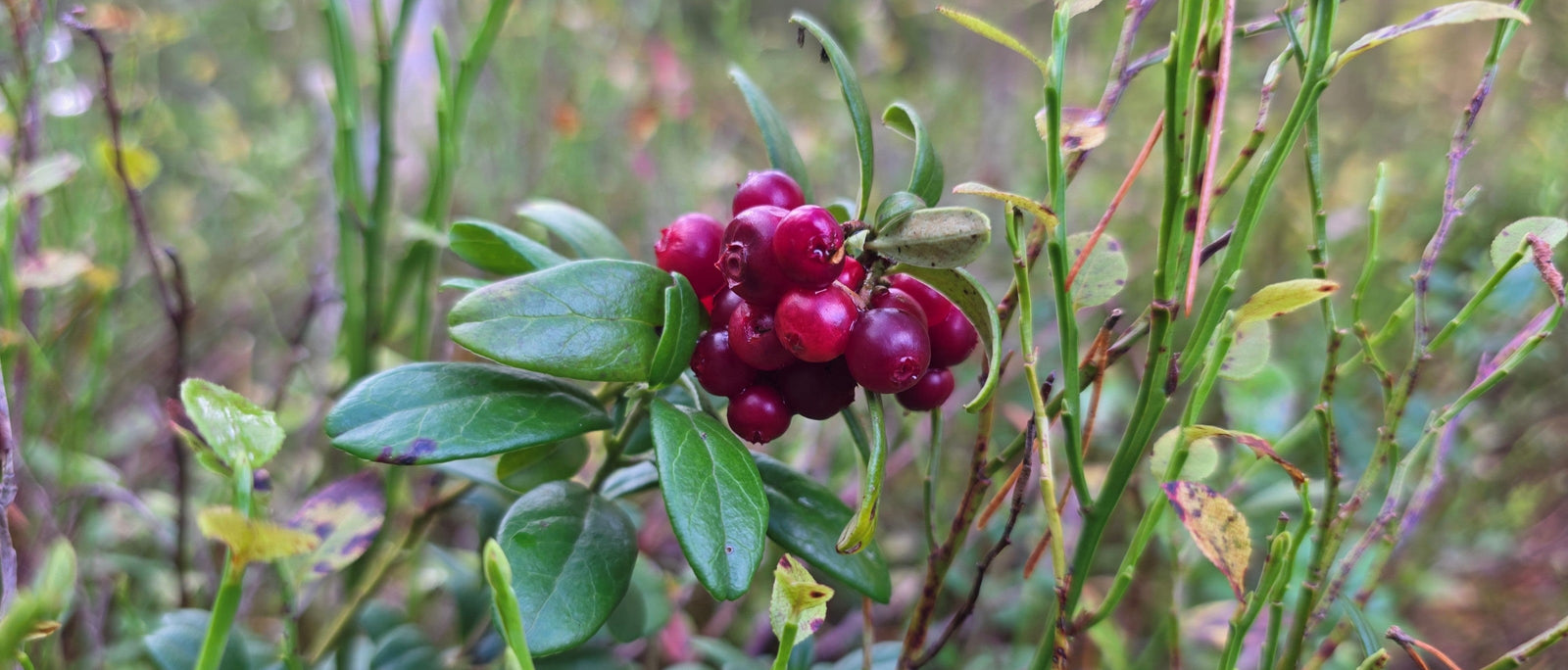

The lingonberry (Vaccinium vitis-idaea) – also known as cowberry or mountain cranberry – is a hardy evergreen shrub found throughout the UK and Northern Europe. Closely related to the bilberry, blueberry, and cranberry, it flourishes in the acidic soils of coniferous woodland, moorland, and heathland across Northern Britain.
These berries have long been prized for their tart, cranberry-like flavour and high vitamin content. They're commonly used in Scandinavian dishes as preserves to cut through rich, hearty dishes such as Swedish meatballs, pork chops, and creamy reindeer stews.
While most of Northern Europe celebrates these berries, they're not a part of British cuisine – although they definitely should be. It's possible to find large quantities of lingonberries during the autumn across the UK, and they're just as easy to use and preserve as our more sought-after wild fruits, such as the blackberry, bilberry, and elderberry.
In this guide, you'll learn how to confidently identify and find lingonberries in the wild. I'll also teach you how to harvest, prepare, and use these autumn delights.

Vaccinium vitis‑idaea is a low-lying, woody shrub that carpets heathland and the floors of coniferous forests. It's relatively unassuming and can easily be missed throughout spring and summer when its fruits are yet to form.
It grows evergreen leaves that are dark, glossy, and oval-shaped. The edges are smooth and slightly curled over at the edges. The topside of the leaf is shiny and smooth, while the underside is matt and has dark, dotted glands – these can be seen when the leaves are held up to the light.
The blooms of the lingonberry bush appear throughout May and June in the UK. They're small, bell-shaped and are white to pale pink in colour.
The berries appear from late August through to November. They're small, bright-red, and shiny with a pinkish-red inner flesh. They taste tart, sweet, and bitter when ripe – similar to a cranberry.

Identifying this species is relatively easy. However, other small, red berries that are inedible or toxic exist in similar habitats, so it's important to learn the defining features of Vaccinium vitis‑idaea before heading out into the field.
Here are the defining features of Vaccinium vitis‑idaea:

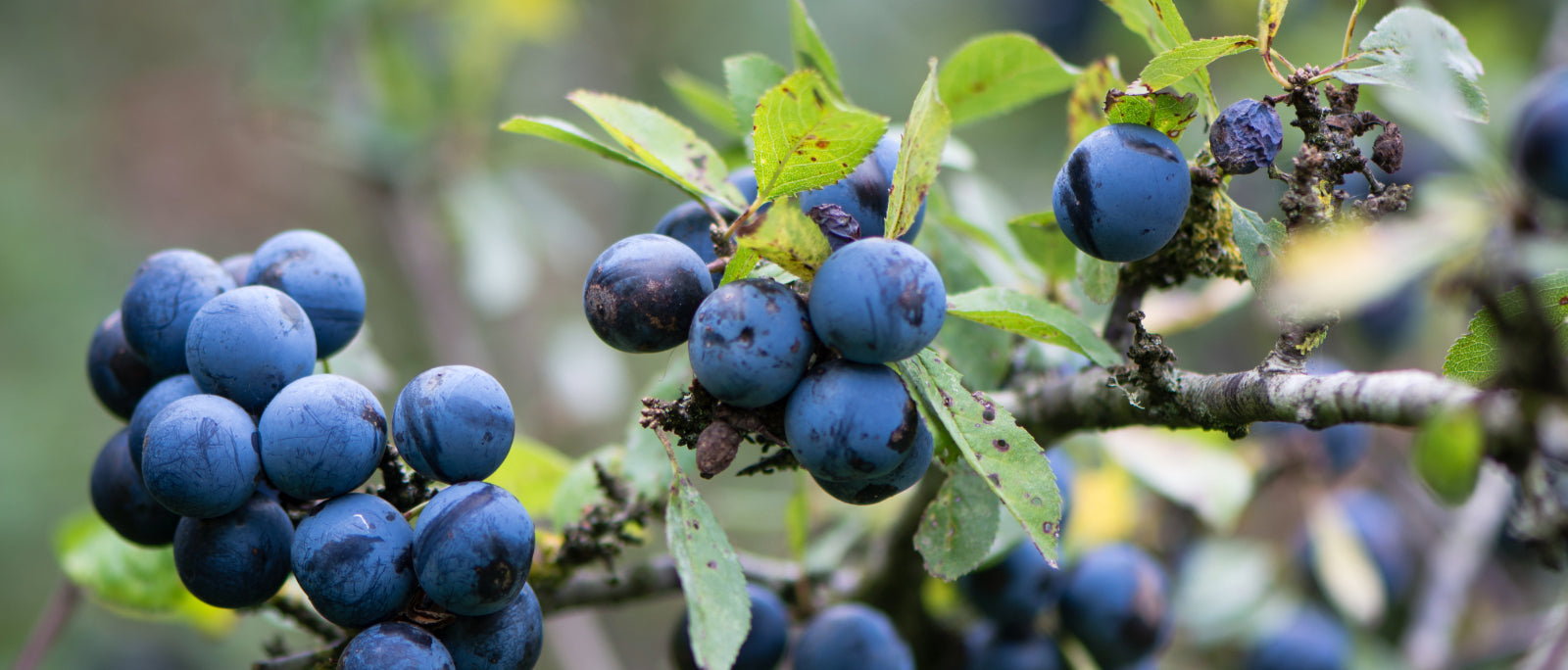
Several berry-producing plants share visual similarities with Vaccinium vitis‑idaea and grow in similar habitats. However, with attention to leaf, stem, and berry detail, they're easy to tell apart.
With that said, you should educate yourself on these potential look-alike species to make sure you don't mistake them for lingonberries.

You'll find lingonberries in the cool, acidic uplands of northern Britain, where coniferous forests and heathland dominate. It prefers well-draining, dry, nutrient-poor soils and thrives in open, sunny habitats and sparsely populated woodlands.
In the UK, lingonberries are most common in Scotland, especially within the Caledonian forest and heather-covered hillsides of the north. It's possible to find smaller colonies further south in places such as the Lake District, Northumberland, and the North Pennines, but they can be widespread. The species is rare in Wales and is pretty much absent across Southern England.
You’ll find lingonberries:

Lingonberries can be picked by hand, but it's a time-consuming task due to their small size and the amount required to make delicious jams, sauces, and fruit leathers.
To harvest lingonberries in bulk, consider using a "berry scoop." These simple fruit pickers act like a rake – you simply pull the scoop through the foliage, and the berries are plucked and collected in bulk.
The only drawback to using a berry scoop is that leaves, insects, and dirt are also collected (to some degree). This makes preparing the berries slightly more time-consuming.
When it comes to preparing the berries for consumption, a simple wash is enough. The easiest way to separate any collected leaves is to fill a bucket with cold water, tip in the berries, stir, and sift the leaves from the surface of the water. After this, the berries can be removed, dried, and stored in the fridge before use.
Lingonberries can be consumed raw. However, they're overly tart and bitter when fresh – cooking brings out their sweeter, more nuanced flavours. Because of this, lingonberries are often made into jams and preserves – this not only brings out their natural sweetness but makes them shelf-stable and usable year-round.

This traditional recipe from Sweden celebrates the tart, cranberry-like qualities of lingonberries. It works well with heavy, winter-time dishes and fatty, dense meats such as pork and beef. The acidity and sourness of the sauce cut through hearty dishes, adding complexity to roasts, steak, and, of course, Swedish meatballs and mash.
While this sauce resembles a jam, it’s not a preserve and cannot be canned or jarred. It will last in the fridge for five to 10 days, but can be frozen for up to 12 months.
Here’s how to make it:
![]() |
![]() |