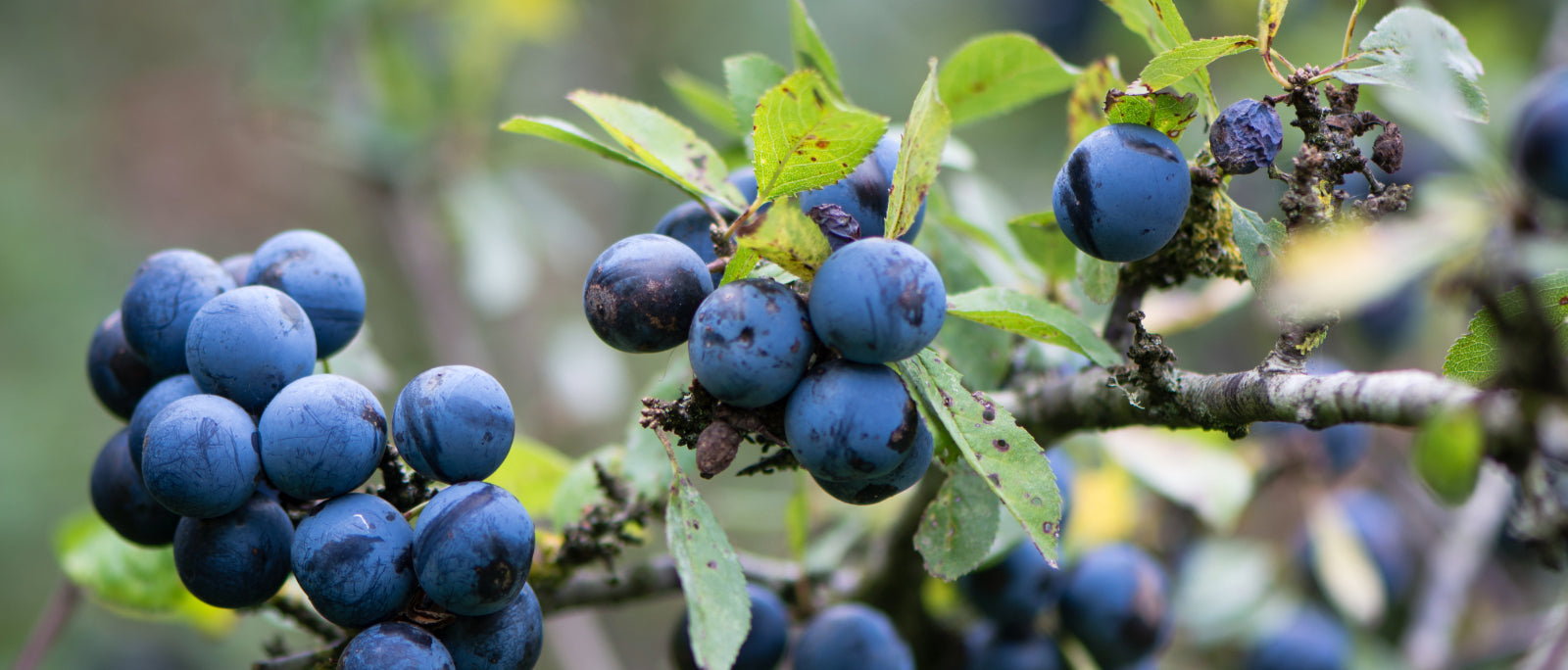

Bilberries are one of Europe's most beloved wild fruits, often mistaken for blueberries (Vaccinium caesariense) – their cultivated North American cousin. Smaller, darker, and richer in taste, the humble bilberry thrives in coniferous forests, heaths, and moorland across the UK and mainland Europe. Colloquially, they are sometimes known by other namees such as blaeberry, wimberry, and whortleberry.
These small berries are both nutritious and delicious. They're high in vitamin C, vitamin K, vitamin E, and contain up to four times more anthocyanins (antioxidants) than regular, cultivated blueberries.
Fruiting from August through September in the UK, they offer foragers a tasty reward for exploring upland and forest ecosystems at the most vibrant time of the year.
In this guide, you'll learn how to identify, where to find, and how to prepare this delicious superfood.

Bilberry bushes are low-growing, perennial shrubs that typically grow no taller than 50cm. They have slender, green, oval-shaped leaves with finely serrated edges. Found in heath, moorland, and coniferous forests, they often blanket the ground alongside other acid-loving species like heather (Calluna vulgaris) and lingonberry (Vaccinium vitis-idaea).
During late spring, bilberry bushes produce small, pale pink or greenish-white blooms that are bell-shaped. These flowers develop into edible berries by mid to late summer.
The berries themselves are small, deep blue, and dusty matte when ripe. They resemble a miniature version of the cultivated blueberry. However, unlike blueberries, the bilberry's inner flesh is purple to red, and when picked, stains the fingers a vibrant violet colour.

These berries are relatively safe to forage, even for beginners. However, you must familiarise yourself with the species’ defining features to ensure you collect the right berries. The guide below will help you identify bilberries in the field.
Here are the defining features of Vaccinium myrtillus:

There are very few true look-alike species to bilberries. However, they can be mistaken for species in the same genus, and other small, dark berries may be confused with its fruits.
You may confuse bilberries with:

Bilberries are widespread across the UK and much of Northern Europe. They thrive in acidic soils and can be found in a few different environments. You'll find these berries growing in heathland, moorland, and coniferous or mixed woodlands.
You'll find these shrubs growing for much of the year, with fresh leaves sprouting from March to April and flowers through May and June. The berries tend to ripen in the UK from August through September, though the exact harvest time can vary depending on yearly weather conditions.
You’ll find bilberries:

Bilberries are extremely small compared to other fruits, which can make harvesting and preparing them a tedious and time-consuming task. You can pick bilberries by hand, but it will take hours to collect any meaningful harvest and your hands will quickly become stained a violet colour. The benefit of harvesting by hand is selection – you can pick the finest berries and leave leaves, insects, and dirt behind.
Alternatively, to speed up the harvesting process you can use a berry scoop. These rake-like scoops are passed through the foliage to collect large amounts of berries quickly. With one of these, collecting buckets of bilberries takes no time at all – just make sure to leave plenty behind for the wildlife.

The drawback of harvesting bilberries this way is the lack of selection. It's impossible to know the exact quality of every berry you harvest, and you'll pick up insects, dirt, and leaves alongside them. This makes post-harvest processing a little more time-consuming – you'll need to separate any leaves or bad berries before washing and storing.

Making fruit leather is one of my favourite ways to use bilberries. This recipe not only preserves the berries and makes them shelf-stable for up to one year, but it also completely changes their texture, giving them a candy-like quality. This black fruit leather may not look particularly appealing, but trust me, it's delicious.
Whether you're looking for a healthy alternative to sweets for snacking on in the evenings, a sweet treat for your kids’ lunchbox, or a vitamin-packed trail snack for hiking, bilberry fruit leather fits the bill.
Here’s how to make it:
![]() |
![]() |