
For those new to the sport, trail running might conjure up images of sinewy superhumans flying up and down mountains. And those people exist, but here’s the secret: trail running probably entails more walking than you think. Not all trail runs have to be mammoth adventures. They can be as short or long, steep or gentle, undulating or flat as you like. That’s why, for beginners, walking makes an excellent base for transitioning to trail running.
Depending on your walking frequency, you’ve likely already developed solid cardiovascular capacity and endurance – getting the body used to long stretches of time outdoors – and strengthened key stabilising muscles for navigating trails (ankles, glutes and quads). So, if you’re seeking out next steps for starting your trail running journey, keep scrolling.

The difference between walking on trails and running on trails is speed. For new runners, ramping up the tempo may feel nerve wracking, but – like for everything else in life – it just takes practice. Build confidence on trails that work for you.
Not all trails are born equal. You’ll likely need to embrace different skills depending on the type of trail you’re running on. Get to know the differences:

Single track
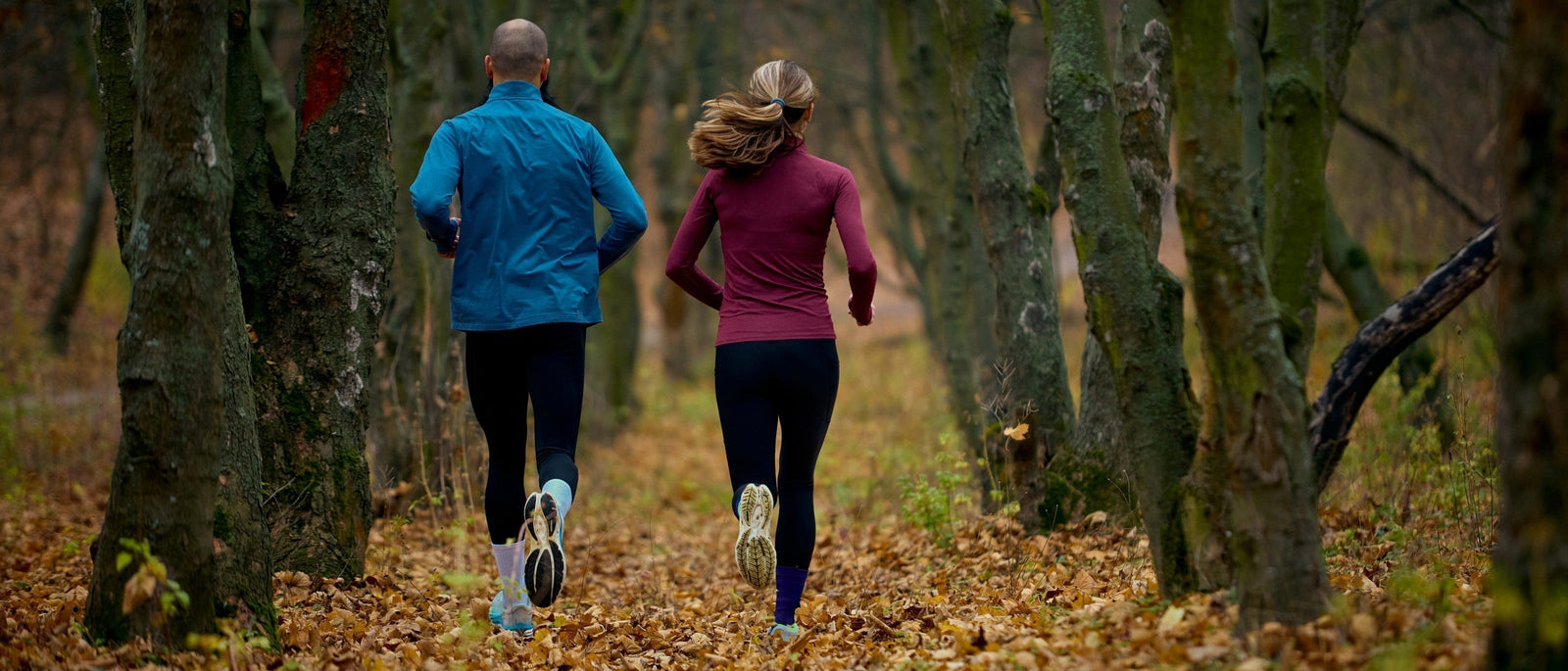
From towpaths (canal or riverside paths) to forest trails, single track paths may be carved from gravel, dirt, mud or sand, and often only allow enough width for one person. Typically quite flat, these are a good beginner-friendly option.
Double track
Similar terrain to single track, but wider – whether that’s in woodland or on a beach. Think forestry tracks, fire roads and other dirt or gravel roads. Double track trails are ideal for maintaining a steady rhythm or pace.

Technical
Rugged, often very narrow paths: technical trails often offer a more challenging trail option, demanding complete focus for safely navigating unpredictable terrain such as undulation, rocky outcrops, rogue roots and gnarly bracken.
Thanks to the repetitive high-knee movement patterns, technical trails help build strength and stability.

Mountain
Mountain trails occur on – you guessed it – mountains. Expect elevation, adding in the additional challenge of navigating ascent and descent, which are both skills in themselves.
Tips for uphill running: maintain an upright posture and lean from the ankles, not the waist. Many runners try to visualise climbing stairs to help maintain cadence and form.
Tips for downhill running: lean forward slightly while taking short, quick steps to maintain control.
Some mountain trails might also demand scrambling or mountaineering experience. This is particularly the case for skyline running, an extreme form of mountain running often associated with tricky technical paths, exposed rocky ridges and epic mountain-scape views.
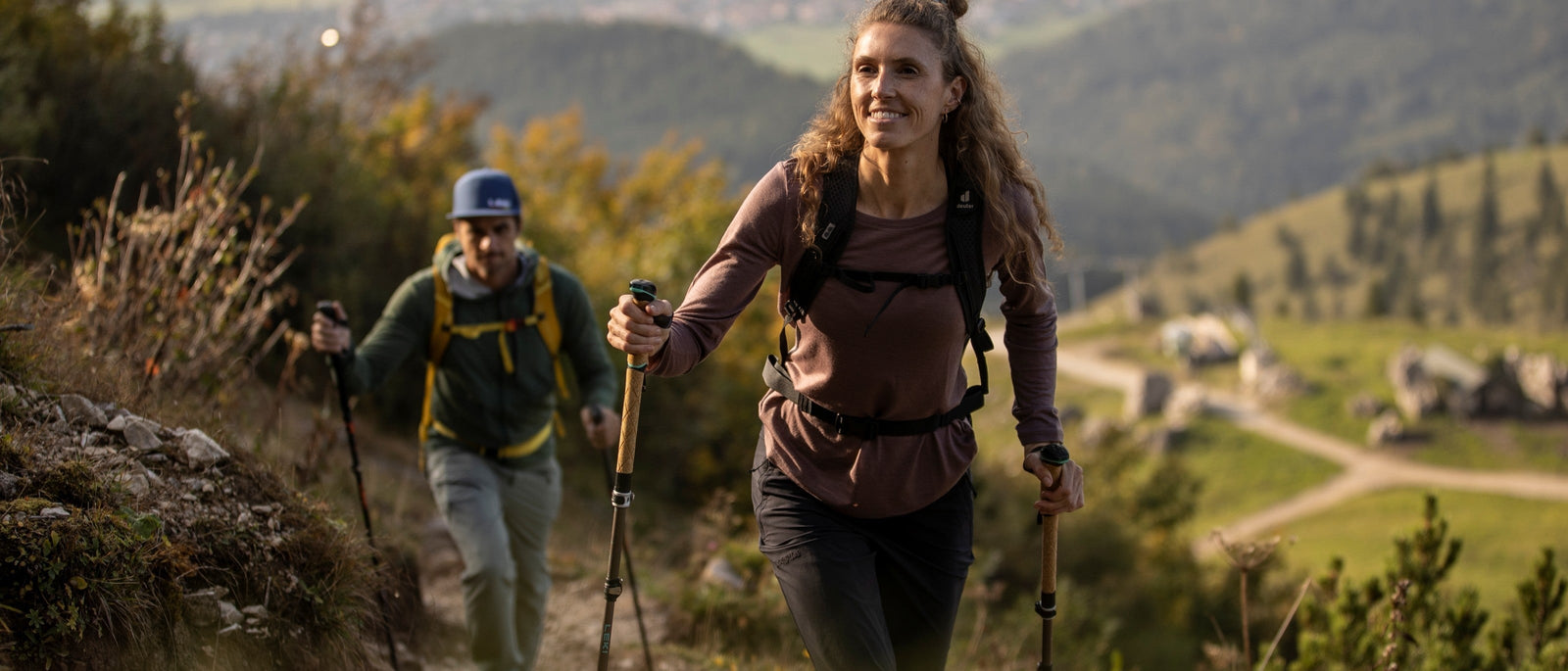
Routes might combine a mixture of terrain. Start your trail running transition on trails you already feel comfortable hiking on (and know well so you don’t get lost!). This allows you to find momentum as you improve speed and confidence.

Listen to your body and set yourself small goals. If you need to walk, walk. If you feel like running, run. When tackling longer distances, periodic walking – also called the run-walk-run method – can even help you run more efficiently, lower injury risk and recover faster. During races, trail runners often follow the common strategy of, “walk the hills, run the rest.”
Consider working with a running coach to build a training plan according to your specific needs.
Your kit list is likely to look a little different. Swap out your hiking pack for a light trail running vest or fastpacking bag. That is, if you need one at all (your one-hour 5km trail walking route might now become a 30-minute run).
But it’s important to be prepared for any scenario, just like you would on a hike. Discover our full trail running vest recommendations for trail running here.

When it comes to footwear, different trails call for different shoes. My go-to picks are the Altra Olympus 6 for mixed terrain and Salomon Speedcross for muddy trails and mountains. I’ve worn both for years. I also have plenty of running friends that swear by VJ shoes for mountains, too.
However, if you’re just starting out, a hybrid shoe such as the Hoka Speedgoat, Salomon Sense Ride or ASICS Gel Trabuco is a good starting point. These are all good-grip, sturdy shoes that can handle both trails and road.
Those who enjoy mountain terrain will want to invest in shoes with deeper lugs, stabilising you as you tackle elevation. These are also great for icy or snowy conditions, but double up with a pair of microspikes – such as Black Diamond Distance Spikes – with your non-mountain trail shoes for similar support. Worth the investment, these will allow you to spend less time trying not to slide and fall, and more time soaking up the surrounding winter scenery – which often paints trails in an entirely new light.

Leave the soup flask and sandwiches at the car and make them your post-run meal instead. Instead, pack lighter snacks to keep you sustained without feeling sluggish. Think: dried fruit, snack bars, energy gels and sweets. For runs longer than 60-90 minutes, take 30-60g of carbohydrates with you, plus extra so you’re ready for the unexpected.
Depending on your trail running goals, a nutritionist can help you develop a specialised plan suited to your specific needs.

In running as in life, you are the people you surround yourself with. Make your transition to the trail as easy as possible by finding other like-minded souls in the running community. Here are some great ways to meet people for friendship, inspiration and motivation:
Events are an excellent way of meeting enthusiastic folk. Wherever you are in the world, you’ll find trail running events in abundance. Short, long, steep, flat: there really is something for everyone, with a diverse range of experiences all taking part. Marking something in the calendar is also a great motivator for getting out there, encouraging training to deepen experience and technical know-how.
Find a running group near you. Even city run clubs will likely have a sub-culture of trail running, with trail-loving members typically organising weekly or ad-hoc trail runs out in the countryside.
If finding a physical community proves hard, turn to other formats. From books to podcasts to social media, immerse yourself in the mindset of other trail runners to help inform your own trial running journey.
Born to Run by Christopher McDougall and Eat & Run by Scott Jurek are considered the holy grail of trail running literature – both exploring the human body’s remarkable capabilities for the sport, what to expect, nutrition advice and other helpful tips.

Don’t overthink it. The beauty of trail running is that it's just that: movement on the trails, and often in nature-filled places. You’ve ditched pavements for paths for a reason. Embrace the playfulness that comes with navigating nature’s running routes.
Just like any sport, trail running offers a new way of observing your surroundings. Stop to notice the light on the lake, listen for the bird calls and other natural sounds, and feel the breeze on your face. You might even observe new qualities to landscapes you thought you knew well – and explore new capabilities within yourself, too.