
Your Cart is Empty
English
£154.95 £194.95
 UK: Free Shipping
& Free Returns
EU: Free Returns
& No customs fees

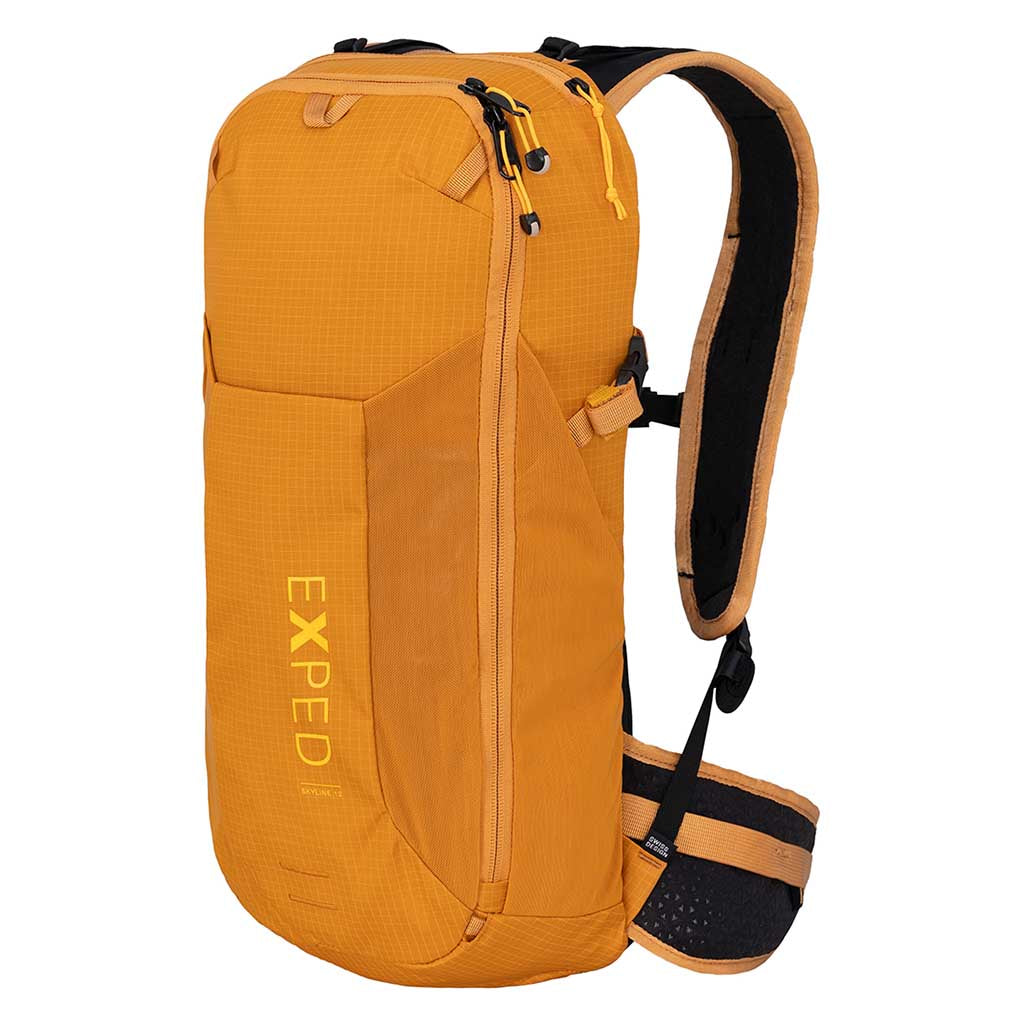
When the route demands more than a few days of self-sufficiency – or when you simply refuse to leave anything behind – the EXPED Ridgeline 65 gives you the space and carry comfort to manage it. Ten additional litres over the Ridgeline 55, with the same thoroughly adjustable carrying system, the same Air Flow back panel and the same smart organisation layout. The U-shaped front access panel opens up the main compartment without the usual top-loading scramble, the sleeping bag compartment can be separated or opened fully, and the top lid lifts off as a standalone hip bag when you're in camp. The generously sized top lid doubles as a removable hip bag when you want to travel light on some summit side quest, just like the command module detaching from the main body of the Apollo spacecraft. The roll-top extension adds extra volume on the days you need it. Integrated rain cover, hip belt pockets and two mesh side pockets round things out. Durable recycled polyester throughout, with a 5-year warranty.
| S–M | L–XL | |
|---|---|---|
| Volume | 65l | 65l |
| Min. Weight | 1790g | 1850g |
| Max. Weight | 2120g | 2180g |
| Dimensions | 82×34×32cm | 84×35×33cm |
| Backlength | 43–51cm | 49–57cm |
| Load Limit | 22kg | 22kg |
| Liner Fabric | Recycled 150D polyester; PU coated; 3000mm water column; bluesign® approved fabric |
| Shell Fabric 1 | Recycled 450×300D polyester; PU coated; 1500mm water column; bluesign® approved fabric |
| Shell Fabric 2 | Recycled 600D 82T polyester; PU coated; 1500mm water column; bluesign® approved fabric |
| Frame | Spring steel U-frame |
The Exped story started in the early 1980s, in a basic log cabin deep in the Canadian wilderness. That might seem strange for a brand that is Swiss through and through. But it starts to make sense when you hear founders Heidi and Andi Brun talk about their wanderlust as young, twenty-something dreamers.
They built the cabin with their own hands and survived through the harsh winter by learning essential outdoor skills. Day-to-day existence relied on what nature provided – teaching them to live sustainably and with minimal impact. It also demonstrated clearly and simply that the most valuable thing to take into the great outdoors is knowledge, not equipment.
Their fledgling company started out as a distributor, bringing iconic outdoor brands to Switzerland. But soon, they became dissatisfied with other companies’ products. They felt they could do things better. So, they did, transitioning from distributor to manufacturer in 1997. What followed was a slew of pioneering products, from robust backpacking tents to down-filled sleeping mats. Generations on, many of those products are still part of the current Exped range – more refined, yet still built to work in the wild.