
Your Cart is Empty
English


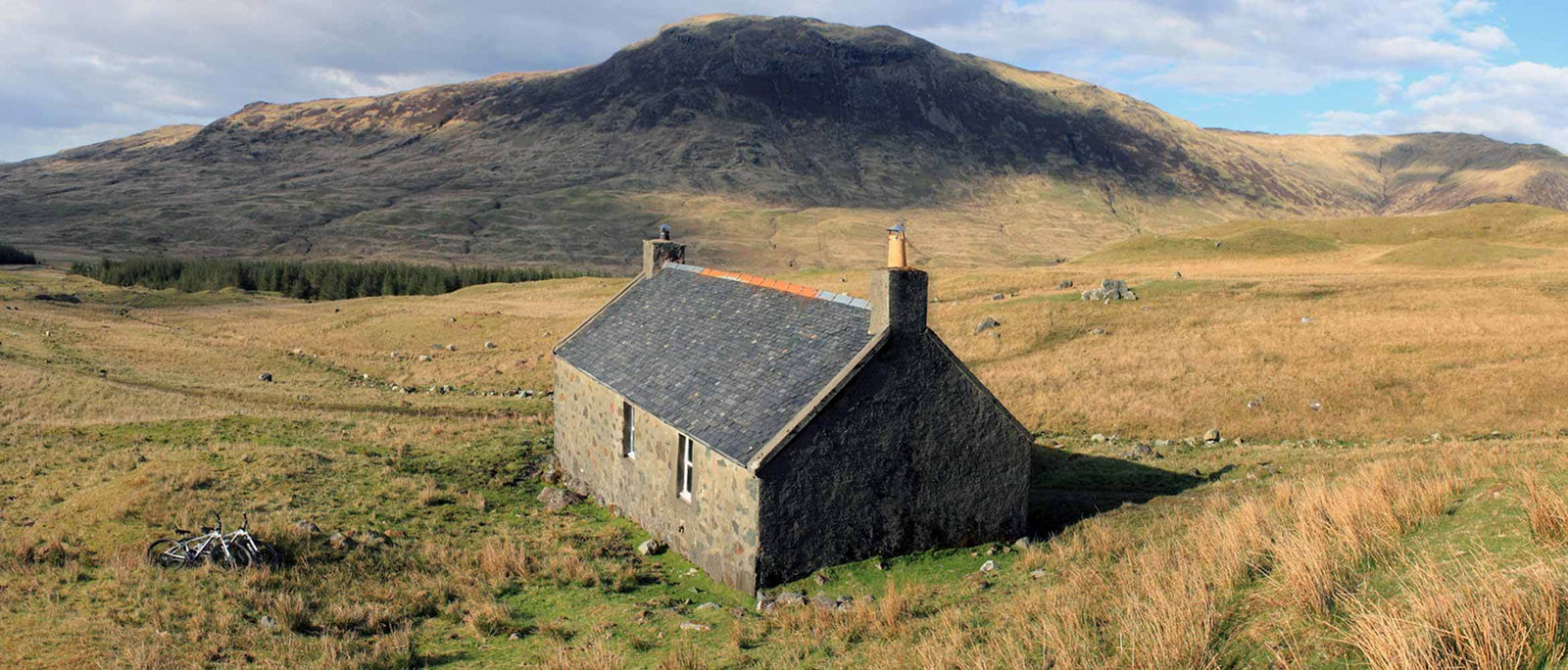
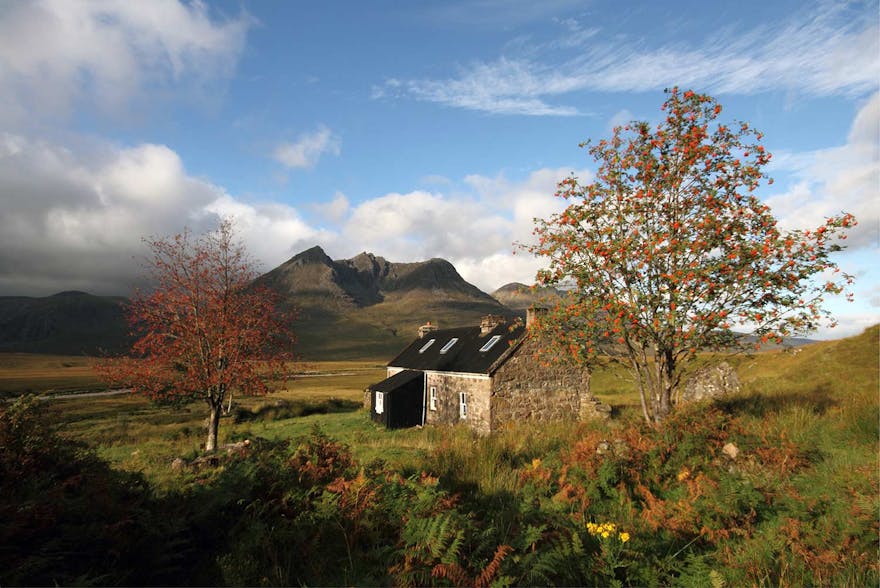
Scattered across Scotland is a network of simple wilderness shelters known as bothies. They're free to stay in and open to anyone – as long as you can find them. Sleeping in a bothy is a fantastic way to finish up a memorable day in the great outdoors.This makes them the ideal accommodation option for all sorts of outdoors enthusiasts such as backpackers, bikepackers, climbers and hikers. There are more than 100 such bothies dotted across Scotland (plus a few in England and Wales), all looked after by dedicated volunteers.
The word bothy comes from the Gaelic "bothan" and means hut or cabin. Many bothies were originally used as basic accommodation for estate workers.
A bothy is usually a simplistic building with walls and a roof but little else. Inside you might find a fireplace, sleeping platforms and occasionally a sink and composting toilet. Many bothies in the UK are looked after by the Mountain Bothies Association (MBA) with the aim of maintaining them to a basic but watertight and useable shelter.
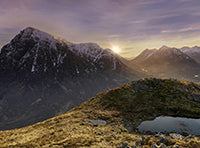
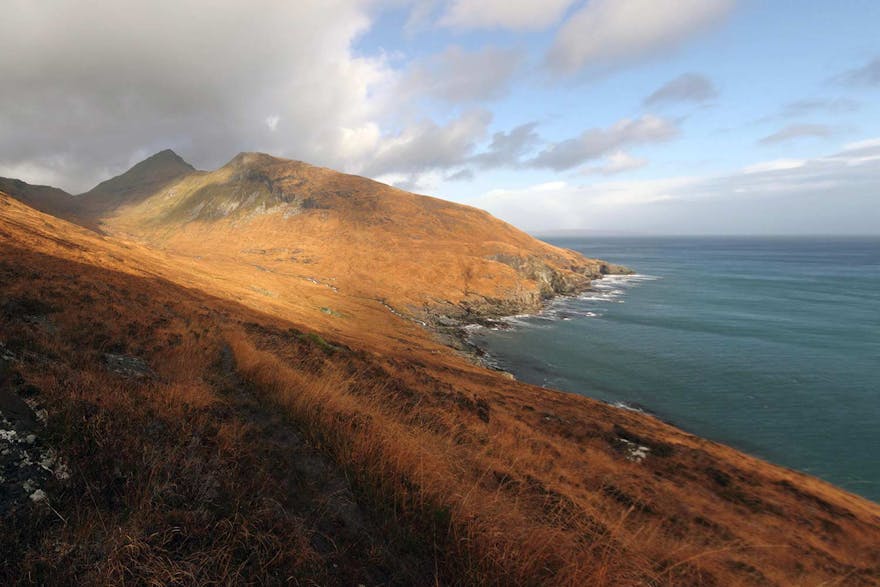
Because most bothies are in remote locations it is usually only possible to reach them cross-country on foot, mountain bike or sometimes by kayak. Bothies serve as a convenient place to sleep if you are in pursuit of a distant mountain top (like Munro-bagging) or hiking an off-the-beaten-track long-distance trail. Some people also enjoy "bothying", which is the pursuit of setting out with the goal to reach a bothy and stay overnight or enjoy a rest and a bite to eat before returning.
Bothying started in the 1930s in the UK when urban workers from the towns and cities started to go walking and climbing. Weekend groups of young men would hitch-hike or use public transport to reach the hills. They started to use a number of remote and partly derelict cottages for meeting and sleeping. The leisure pursuit grew after World War II, especially among Munro baggers, and bothies became even more popular.
However, by the 1960s, many of the shelters were falling further into disrepair due to lack of maintenance. Around this time an idea was conceived by a cyclist Bernhard Heath to make some of the UK's bothies more useable. This led to the founding of the Mountain Bothies Association, with the aim of formalising the refurbishment and upkeep of a wider network of stone-built shelters. Although looked after by the MBA, the bothies are still owned by the land or estate owners, who give permission for public use.
For many decades, the exact location of the MBA bothies, 80 of which are in Scotland, was revealed only to members. Then, in 2009, the association decided on a more "open to all" policy and published the first online guide to the bothies. There are also other bothies that are not looked after by the MBA and their location is often revealed through word of mouth. More recently, a book, The Scottish Bothy Bible, has been published that offers a wealth of information about location, size, facilities, routes and key attractions of 104 Scottish bothies.
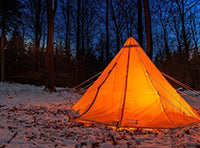
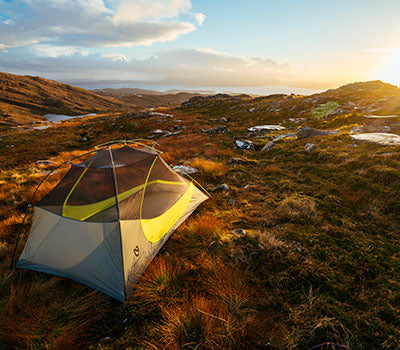
Bothying requires you to reach a bothy under your own steam, on foot, bike or by kayak. They are basic shelters so you need to take all your own equipment and supplies. For an overnight stay in a bothy you will require camping equipment, such as a sleeping mat and sleeping bag, but not a tent (though it's often wise to take one, in case the bothy is full). You'll be cooking outdoors, or just inside the bothy, so you'll need a cooking stove, pans, crockery, cutlery, and food and water. It's recommended that you take your own fuel as well, such as coal or logs. Sometimes you can collect fallen wood nearby, but not always. Bothies can't be booked and you will only discover who is using the shelter on arrival.
There are no formal rules for using bothies, although the MBA has compiled a simple code of conduct. It's requested that people respect each other and the environment. You should leave the bothy clean and tidy – basically, how you would hope to find it yourself. If there is no toilet, make sure you bury human waste out of sight, and take all litter away with you. Groups of more than six people should not use a bothy or camp nearby without seeking the permission from the owner. Anyone who stays in a bothy is asked to sign a logbook (the 'Bothy Book') so a record is kept of visitors.

Bothying is for anyone with a sense of adventure and an ability to navigate cross-country. Author of The Scottish Bothy Bible, Geoff Allan, says: "Anyone can get into bothying and I'd love to see a wider range of people enjoying bothies. You could be a family, a keen walker, a Munro bagger or a mountain biker looking for somewhere remote to visit. You could walk to a bothy for a picnic and walk back again or hike there for a night or two with friends. I have also heard of people ticking off different bothies as a hobby."
Visit The MBA website, the blog Bothies on a Bike, or buy the book The Scottish Bothy Bible by Geoff Allan, Wild Things Publishing, priced £16.99.
The MBA is a charity and relies on volunteers to maintain the bothies and for donations. If you can help with their work please do so.
There are around 100 bothies across Scotland, with roughly 80 of those maintained by the Mountain Bothies Association. Additional shelters exist outside the MBA network – some managed by estates, others simply passed on by word of mouth among the hillgoing community.
Yes – the MBA publishes an interactive bothy map on their website, showing the locations of their maintained shelters. For a more complete picture, The Scottish Bothy Bible by Geoff Allan covers 104 bothies with detailed location information, approach routes and key features.
As noted up top, the word bothy derives from the Scottish Gaelic "bothan", meaning a small hut or cabin. Historically, bothies were simple dwellings used by agricultural labourers and estate workers – particularly those working on large Highland estates during the summer months. The word has stuck, even as the buildings have found a new purpose as free shelters for walkers, climbers and cyclists.
Yes, though Scotland has by far the greatest concentration. The MBA also maintains a smaller number of bothies in England and Wales – mostly in remote upland areas such as the Pennines, the Lake District and Eryri (Snowdonia). If you're searching beyond Scotland, the MBA website is the best online resource.
No – bothies are free to use. There are no fees, booking systems or charges of any kind. The MBA operates as a charity and relies entirely on volunteers and donations to keep the network maintained. If you use and enjoy bothies regularly, consider becoming a member or donating to support their ongoing work.
No. Bothies operate on a first-come, first-served basis and cannot be reserved. You'll only find out who else is staying when you arrive. This is part of the charm – and why it's always worth carrying a tent as backup, particularly on busy summer weekends or if visiting bothies located close to popular trails.
 |
 |
Images: Fiona Russell, unless credited otherwise.