article - || true

SAME DAY SHIPPING | FREE UK RETURNS | EU & INT'L SHIPPING

SAME DAY SHIPPING | FREE RETURNS

Climbing Kilimanjaro: What I Wish I’d Known
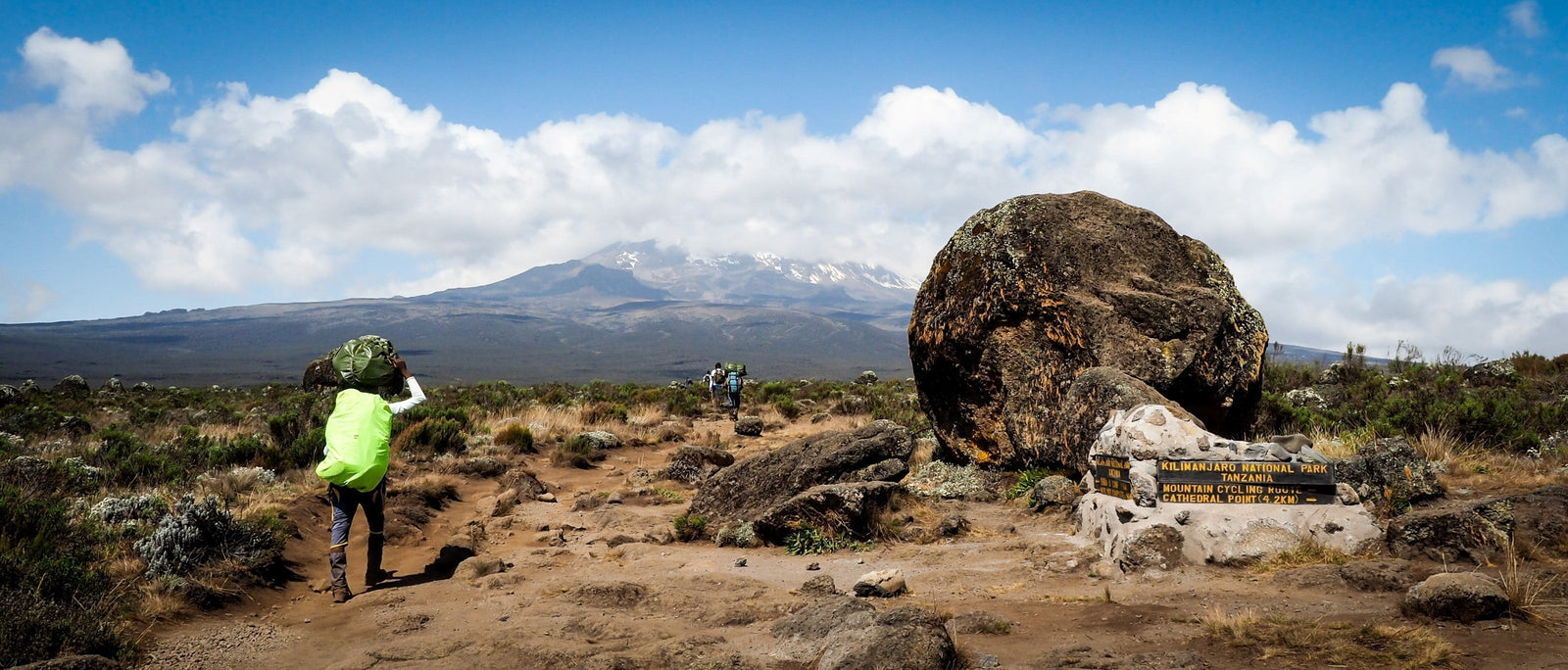
More than 16,000 people a year attempt Kili, the world’s highest freestanding mountain. But it’s a demanding trek: risks include altitude sickness and bitter cold. Summiteer Kirsten Carter explains what to know before you go.

Updated 27th March 2026 | Words and photographs by Kirsten Carter


Kilimanjaro, the highest freestanding mountain in the world, stands at an elevation of 5,895m. Sure, it’s smaller than Everest, but it’s no joke. As Africa’s biggest mountain, it’s one of the traditional Seven Summits – the highest peak on each of the world’s continents – which makes it a popular objective for adventure mountaineers. And its reputation as being one of the least technical 5,000m+ peaks also make it a draw for keen hikers and charity challenges. For many, it's the experience of a lifetime.

Before I climbed Kili back in 2015, I had no previous climbing experience. I’d been camping a few times, but nothing serious, and never on top of a mountain. From my research I’d read Kili could be compared to a long walk uphill, with little technical climbing skills needed: just sheer determination, a moderate level of fitness, and of course, luck that you don’t get side effects from the altitude.

My experience of taking on the highest mountain in Africa wasn’t too bad, apart from the vicious sunburn coupled with frostbite at the summit on Christmas Day. But there are certainly a few things I wish I had known before climbing.

Climbing Kilimanjaro

1: The Route You Take Can Be Critical To Success

As crazy as it might sound, looking back now, my success in climbing Kilimanjaro was largely dictated by the route I chose. In fact, if you do a little research you can see the average success rate for each route.

The price of taking each one is marginally different; but essentially, the longer you go, the higher the success rate. This is because you’re giving your body more time to acclimatise without putting it under too much stress. Of course, the longer you spend on the mountain, the more expensive your trip is likely to be in terms of overall cost.

When I first did my research into climbing Kilimanjaro, I was naive to the fact there were so many routes to choose from: seven in total. I took the 7-day Machame route (although there is a 6-day version too). This happened to be one of the most popular routes up Kilimanjaro, since it has around an 80% success rate.

For me, it was ideal. I wouldn’t have wanted my trip to be any longer or shorter, since this could have influenced whether or not I suffered from altitude sickness and made it to the summit.

However, you also have the Lemosho, Marangu, Rongai, Shira, Northern Circuit and Umbwe routes. Each has a different level of difficulty, with some being as short as 5 days, leaving little time for acclimatisation (and the lowest success rates as a result).

Ultimately, the route you choose comes down to your budget and preferences, but bear in mind that longer routes give more time for your body to adjust and acclimatise to the mountain, giving you a better chance of actually reaching the summit.

2: Be Prepared To Eat A Lot

On average you are walking for between 5 and 8 hours a day, and on the summit day from 10 to 12 hours depending on the route you choose. The cooks and guides on your team need you to eat to help replenish calories and keep energised.

Eating a lot like this isn’t always easy when you start to ascend, as altitude tends to reduce your appetite. In addition, you need to be drinking a lot of water. As inconvenient as it is to keep needing the loo, you need to stay hydrated. This is where electrolytes will come in handy too.

Some people had fancy Platypus-type hydration reservoirs for their water but I did find it fine with just a large bottle, plus an insulated one for summit day so it didn’t freeze. Just ensure your bottle holds enough water for the day. You’ll need to drink 2 to 2 and a half litres a day in total.

Kilimanjaro

3: Summit Day Is The Toughest Part

Bleary-eyed at midnight, the icy wind slams against your tent as you hear your guide’s voice awakening you to start your final day’s hike to the summit of Kilimanjaro. It’s by no means easy: lack of sleep, sub-zero temperatures and altitude all work against you.

Every step feels like five, almost as if you are moonwalking, but with so many other trekkers around you, a stream of head torches all walking to a shared objective makes it feel so special and magical.

I have to say, compared to climbing the rest of Kili, the summit was indeed the hardest, as was the way down, due to the steep drops and loose stones. I slipped and fell often.

Kilimanjaro

4: The Porters Are Your Motivation

The expedition porters will always start to climb ahead of you, so they can put your luggage away and set up camp well in advance before you get there. The speed these guys climb is unmatched, and they often do it in flip-flops. And unlike you, they’re not doing this for fun – it’s their job and their livelihood.

Despite that, they don’t complain, they all have a very positive mindset and were one of my main sources of motivation when I was climbing. I had all the gear and no excuse.

Kilimanjaro

A blurry photo taken by my guide, who tried his best to get some candid photos!

5: There Is Actually Some Technical Climbing

Depending on your route, you might have to negotiate the Barranco Wall. This is the most technical section of the climb, which I personally found to be pretty terrifying.This part involves a lot of rock scrambling, and with one wrong foot, you could find yourself falling. But your guide is always there to help you and catch you, which ensures that most people can easily manage this part of the Machame route.

Kilimanjaro

6: You’ll Walk Through Various Climates

One of the most impressive aspects I found when climbing was all the different climate zones you pass through. It almost felt as if you were climbing multiple different mountains sandwiched into one.

In fact, there are five different and distinct climate zones you pass through on the way to the summit. The first is the Cultivation Zone, mainly consisting of regular villages and farmland at 2,600ft to 5,900ft. Next is the Rainforest Zone at 5,900 to 9,200 ft, followed by the Heath and Moorland Zone at 9,200 to 13,100 ft; the Alpine Desert Zone at 13,100 to 16,400 ft, and finally the Summit Zone at 16,400 to 19,341 ft.

Inevitably, changes in climate and weather means you’ll also need to change your clothes. You need to be prepared to deal with heat, cold and wet, sometimes in quick succession, without overpacking and carrying too much weight. The secret to success is effective layering.

Kilimanjaro

7: When It Comes To Kit, Less Is More

Less is more when it comes to packing for Kilimanjaro – remember, you’ve got to carry it. That being said, you don’t want to arrive unprepared (though you can rent anything you need when you get to Tanzania as a backup).

Here’s a list of recommended clothing and equipment to take to Kilimanjaro, with a few examples.

Jackets

A cosy but breathable fleece jacket as an insulation layer, plus a warm hooded down jacket for the summit, preferably with a water-repellent face fabric and fill. You’ll also need a waterproof jacket (hard shell) for rain.

Trousers

Trekking pants and shorts, waterproof overtrousers or rain pants, plus warm trousers or ski pants suitable for temperatures down to -15°C/5°F.

Hiking underwear

You’ll need 5-6 pairs of comfortable, fast-drying underwear as well as some warmer thermal underwear for the trip.

T-shirts


Avoid cotton tees due to sweating. Instead, opt for 3-5 short-sleeved shirts and two long-sleeved shirts. Synthetic or merino wool baselayers are best, since they wick moisture and dry quickly.

Essential accessories


A head torch for the summit, spare camera batteries, a beanie hat, sunglasses and a neck gaiter (e.g. a BUFF).

8: It's a Mental Challenge As Much As A Physical One

Before I climbed Kili, I had little to no experience of mountain life. My training consisted of long walks at a slight elevation. I also climbed Kili alone as a solo woman. Most people I met were part of other, larger groups, but thanks to my guide, I never felt like I wasn’t part of a team.

Climbing Kili was hard, but not in physical terms, more for mental reasons. The scenery is amazing, but the seemingly endless hours of walking become a repetitive mental challenge, with the altitude making everything feel slower and more difficult.

That being said, I did make it to the summit, with the help of my guide, one step at a time, following the line of shining head torches through the glaciers to reveal a stunning view over the whole of Moshi, a city in Tanzania, summiting on Christmas Day. It’s safe to say it was a Christmas I will never forget.

Kilimanjaro

9 Extra Tips For A Successful Kilimanjaro Summit

If you aspire to climb Kilimanjaro yourself, life will be a lot easier if you take heed of the following hints, tips and tricks – especially if you’re a woman.

If you’re female, bring a Shewee

It’s no secret that when you’ve gotta go, you’ve gotta go, no matter where you are – even if that’s halfway up Kilimanjaro. And since it’s so important to stay hydrated, this will happen a lot. As a woman, finding a private spot to relieve yourself isn’t so easy, despite my guide guarding me. Although I didn’t have one, a portable urination device like a Shewee comes in very handy (I wish I’d thought to pack one). Just make sure you practice before you go!

Pack plenty of snacks

Though organised expeditions all provide meals for you, it’s not easy eating big meals when you climb, especially as higher altitudes tend to suppress the appetite. Bringing a few favourite, calorie-dense snack bars, like granola or cashew bars, can be a great way to help you stay energised. Just be mindful of their weight. After all, you’ve got to carry them.

Be mindful of the porters

All expeditions have a weight limit of 15kg for personal luggage. Don’t overpack beyond this and take even less if you can. Your porters will thank you. These guys carry your kit all the way up the mountain and down again, often on their heads. In return they get paid around 25,000 Tanzanian Shillings a day, which is less than $10 US dollars or about £8.

Wear sunscreen

Forgetting this was the biggest mistake I made, which is also why I’m almost unrecognisable in my summit picture. The UV rays are no joke on Kilimanjaro. Even if temperatures are sub-zero, wear your sunscreen.

Remember to tip

At the end of your climb you have to tip your team; it’s customary and not optional. Follow the tip guidelines recommended by your climbing company.

Find the right climbing company

There is a huge number of climbing companies to choose from, so look for positive reviews and get a feel for the price by comparing costs to other operators.

Stay positive

Climbing Kilimanjaro is really just about two things: dealing with the altitude and having a positive mindset. If you believe you can do it, you’re already halfway there.

Have altitude tablets on hand

During my climb, I saw some of the most experienced climbers turn around and go back down due to altitude sickness. Its effects can be debilitating. I’ve even seen reports where climbers have died because they pushed themselves too far. My advice? Bring altitude tabs just in case (look up the pros and cons online). You can also get them at pharmacies in Tanzania.

Wrap your batteries

Battery life depletes so fast on Kilimanjaro due to the low temperatures. My phone died on day four, but my camera batteries thankfully lasted because I kept them warm inside my thermal socks. Carrying spares and/or a power bank can also help with this, but keep them wrapped up.

One final note

Remember that you don’t have to be the fittest or be kitted out with the most expensive gear to summit the highest freestanding mountain in the world. You need grit, determination, a great team and a bit of luck.

Frequently Asked Questions

How fit do you have to be to summit Kilimanjaro?

The short answer is: reasonably fit, but not superhuman. Kilimanjaro is a hiking peak – you need no ropes, no specialist climbing equipment, and no previous climbing experience. What does matter is sustained endurance. The trails are mostly non-technical, but the cumulative fatigue and altitude make the climb genuinely challenging; above 4,000 metres, even slow walking feels demanding.

Think miles over mountains – what matters most is the amount of time you spend on your feet, since the trek requires roughly six to seven hours of solid walking per day. A good benchmark: if you can complete a 15km hike on undulating terrain and hike uphill for five to six hours on consecutive days, you're on the right track.

Aim to start building fitness eight to twelve weeks before your trip, and focus on long walks in hilly terrain rather than gym sessions. One crucial caveat – there are many stories of very fit people being among the first in a group to succumb to altitude sickness. Fitness gets you to base camp; acclimatisation gets you to the summit.

What's the best route up Kilimanjaro?

There are seven routes up Kili, each with different durations, scenery, and success rates – and the one you choose matters more than most people realise. The Lemosho route is considered the most beautiful on the mountain, with panoramic views from multiple sides, and it offers an optimal balance of great scenery, high success rates, and relatively low foot traffic. An estimated 90% of all trekkers who take this track make it to the top – and allowing lots of time to acclimatise makes it an ideal choice for anyone new to high-altitude environments.

The Machame route – the one I took – is the most popular on the mountain, and over seven or eight days offers excellent acclimatisation and a solid success rate. Whichever route you choose, the golden rule is the same: longer is better. If you're worried about fitness and summiting, a route of seven days or longer will give you a higher success rate – your body simply needs time to adjust. The shortest routes, at five or six days, carry noticeably lower summit rates as a result.

What is the best time of year to plan a trip?

The best times to climb Kilimanjaro are January through early March and June through October – the clear skies, good visibility and predominantly dry conditions make for comfortable hiking and decent summit weather. The months of January and February offer the clearest conditions, while July through October represent the peak climbing season, coinciding with summer holidays for most European and US trekkers.

If you'd rather have the mountain a little more to yourself, late September is worth considering – the crowds have thinned, conditions are still good, and the Serengeti is in Great Migration season, making it an ideal time to add a safari. The months to avoid are April, May, and November, when the main rainy seasons make trails more dangerous and visibility poor. If those are your only options, the Rongai route on the northern side of the mountain tends to receive less rain than the southern approaches.

Kilimanjaro


Kirsten Carter is a freelance copywriter, blogger and digital marketer specialising in travel, health, luxury lifestyle, tech and wellness.